
Cori Lausen: 48 species listed as endangered federally aren’t recognized as species at risk in B.C. and thus don’t qualify for measures that could save their habitat from destruction or disturbance.
By Cori Lausen, Vancouver Sun
Published Jan 26, 2026
The B.C. government’s Look West strategy is to get four new mines (or expansion of current mines), three new natural gas projects and eight new renewable energy projects built in the next six years.
Article content
The same sense of urgency hasn’t been applied to protecting B.C.’s ever-increasing number of species at risk. Hundreds of species have been identified as threatened or endangered since 2006, yet it has been two full decades since the provincial government last updated B.C.’s Species at Risk list, often referred to as the Identified Wildlife list. Few protections exist for wildlife in B.C. that aren’t on this “Noah’s Ark” list.
This list falls under the Forest and Range Practices Act, and specifies which species are eligible for habitat protection measures during timber harvesting and grazing across the province.
though the province indicated several years ago that this list would be expanded to narrow the large gap between which species the province protects relative to which species are designated as endangered under the federal Species at Risk Act, it has yet to do so. A proposed expansion of the list was publicly reported well over a year ago, but the updated list has yet to receive approval.
Article content
Old or updated, though, the list continues to cover only a tiny subset of the species considered to be in trouble in this province. Of the greater than 1,600 species considered at risk in B.C., only 85 are currently included on the B.C. government’s Species at Risk list.
Article content
Three bat species illustrate the consequences of this delay. Two were listed as federally endangered in 2014, and a third, the hoary bat, was assessed as endangered in 2023 after severe population declines linked to wind energy mortality. Bats play a critical role in controlling insect populations, including forest and agricultural pests, and their decline increases pressure on already stressed ecosystems. As a bat biologist, I see these impacts firsthand in population monitoring and habitat assessments across the province. Bats are just one example of important biodiversity falling between the cracks in B.C.
t may come as a surprise that just because a species is recognized and legally listed by the Canadian government, that doesn’t mean its habitat is protected in B.C. or in any other province. In most cases, protection only applies to areas under federal jurisdiction, like in a national park. There are 48 species listed as endangered federally that aren’t currently recognized on B.C.’s Identified Wildlife list and thus don’t qualify for the protective measures that could save their habitat from destruction or disturbance.
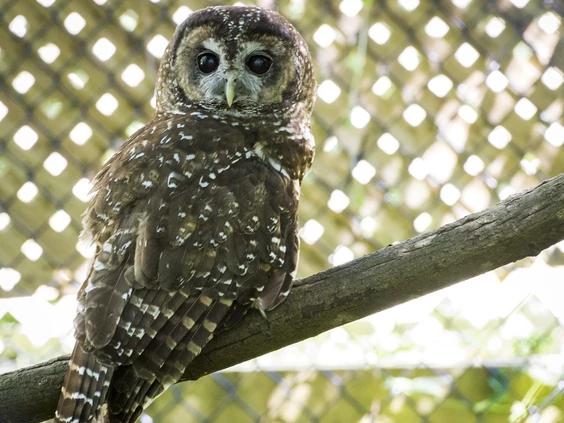
Decades of conservation science show that habitat loss and degradation are the primary drivers of species decline, and that populations rarely recover without strong habitat protection. The spotted owl is B.C.’s most well-known, but far from only, example of how a species can be lost when habitat protection is ignored.
Article content
In 2017, the NDP government justified its decision not to proceed with a provincial law dedicated to species at risk by committing instead to develop a more comprehensive suite of tools to protect biodiversity in the province. While that approach could have merit, progress has been minimal and delayed. For example, in 2016, the province committed to a best management practices document to guide forestry operations in sustaining bat populations in the face of timber harvest. That document was drafted, but has yet to be finalized, let alone implemented, a decade later. Each year of delay makes effective protection more difficult and costly.
Expediting development at the cost of protecting biodiversity and natural areas represents a false economy. Bat-friendly forestry practices, for example, help sustain insect control services that support forest health and reduce management costs that will inevitably arise later. Forests need bats, and bats need forests for mutual sustainability. Weakening this relationship undermines the long-term resilience of ecosystems and the industries that rely on them.
Article content
The costs of continued delay aren’t abstract. Allowing species to slide toward extinction removes critical components from tightly interconnected ecosystems, reducing their capacity to recover.
Article content
While such short-sightedness may be baked into our political system, we can’t let it dictate the fate of our ecosystems and the biodiversity upon which they (and we) depend. If we throw species and their habitats overboard in our rush to develop resources, we will impoverish not just our province, but our world — decisions we make not just for us but for future generations.
Article content
Cori Lausen is director of bat conservation at the Wildlife Conservation Society Canada.