General
-
It’s That Time of Year, Folks—Acorn Collection!
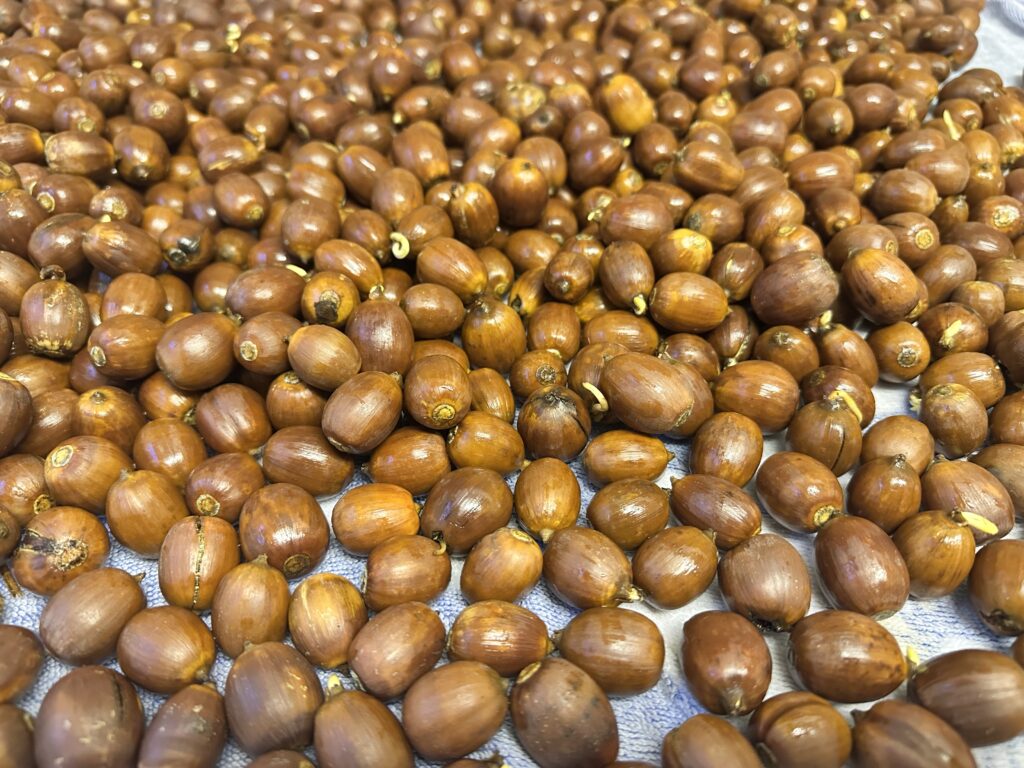
GOMPS’ Volunteer Nursery relies on acorn donations from the public to grow the next generation of Garry oak seedlings. We greatly appreciate your help stewarding and restoring our local Garry oak population.
Garry oak acorns generally mature from mid-September through mid-October. Before heading out, please read our Garry Oak Acorn Collection Guide.
A few important reminders:
- Collect no more than one litre of acorns per person from any one area.
- Choose large, brown, mature acorns without caps.
- Do not collect green, cracked or damaged acorns, or those with small holes or black dots.
- Float-test the acorns in water and discard any that float.
- Place cleaned and tested acorns in a heavy-duty black plastic bag.
- Label the bag with the municipality and nearest street intersection where the acorns were collected.
- Keep the acorns cool and do not allow them to dry out before drop-off.
- Respect private property and never trespass while collecting.
Please note that we are calling for acorns only. We cannot accept planted acorns, potted seedlings, transplanted trees or anything in soil.
Acorns may be dropped off at 1545 Eric Road in Saanich. Look for the specially marked Rubbermaid-style container on the left side of the house near the garage.
Thank you for helping GOMPS protect and restore Victoria’s heritage Garry oak landscape—one acorn at a time!
-
Songhees Nation and the Quadra-McKenzie Plan
🐿️ One of the most significant local discussions this spring centred on the Quadra-McKenzie Plan in Saanich. The Songhees Nation highlighted the importance of viewing growth through the lens of ecosystem health and cultural landscapes, emphasizing that Garry oak ecosystems are part of a living cultural landscape rather than simply vacant land awaiting development. The discussion has helped broaden public understanding of the relationship between Indigenous stewardship and biodiversity.
The Quadra McKenzie Plan (QMP) in Saanich is scheduled for a public hearing on Tuesday, June 16, 2026. The plan proposes significant growth over the next 20 years, concentrating housing and mixed-use development along the Quadra-McKenzie corridor and key transit routes. Its ambitious growth targets are largely driven by provincial housing mandates, illustrating how provincial requirements (Bill 44) are shaping the process more than local area planning.A significant issue attached to the public hearing agenda is a letter from the Songhees Nation, which formally requests that Saanich postpone adoption of the plan until meaningful consultation can occur regarding Garry oak ecosystems, qʷɫaʔəl (camas) food systems, cumulative development impacts, and long-term stewardship planning.
The May 22 letter states:
“The Quadra McKenzie Plan fails to adequately recognize lək̓ʷəŋən Aboriginal Rights and does not provide meaningful protection for the qʷɫaʔəl food system from ongoing development pressures. The proposed land use framework continues patterns of fragmentation and loss affecting a critically endangered ecosystem that is integral to Songhees Nation’s constitutionally protected rights and cultural practices.”
The Songhees Nation specifically asks Council to:
1. Postpone adoption of the Quadra McKenzie Plan pending meaningful consultation with
Songhees Nation regarding Garry Oak ecosystem analysis, cumulative impacts, and longterm
stewardship planning;
2. Include clear Garry Oak and qʷɫaʔəl food system stewardship goals within the QMP,
supported by measurable targets and accountability mechanisms recognizing these
ecosystems as integral to Songhees Nation’s Indigenous rights and cultural continuity; and
3. Develop and implement a responsive management framework outlining mitigation,
restoration, and stewardship measures where ecosystem thresholds or stewardship goals
are not met due to development pressures.The Songhees position goes beyond individual tree protection. It argues that Garry oak ecosystems and camas food systems should be recognized as interconnected cultural landscapes and living food systems rather than collections of isolated trees, and that this extends to the entire ecosystem that supports plants, pollinators, birds, animals, insects, and the cultural practices connected to them.
Their letter describes these systems as being tied to Aboriginal rights, stewardship responsibilities, food sovereignty, medicines, teachings, and the intergenerational transmission of knowledge. They are “not simply ecological features” but living cultural artifacts.
Saanich staff responded that the QMP is a high-level planning document and that issues such as cumulative effects assessment, ecosystem thresholds, restoration priorities, and long-term stewardship are better addressed through future implementation plans and related municipal initiatives.
The staff memo repeatedly suggests that these concerns can be addressed later through:
- Biodiversity Conservation Strategy implementation
- Urban Forest Strategy implementation
- Agriculture and Food Security Plan updates
- Future monitoring and reporting
- Future stewardship initiatives
rather than through amendments to the QMP itself.
Saanich staff are aware that Bill 44 significantly limits municipal authority to protect trees and environmental features that fall within a permitted building envelope on private property.
The problem is that up to 75% of the urban forest exists on private property, where redevelopment is occurring. As redevelopment intensifies, existing soil volumes, mature trees, and ecological functions are removed, while reduced setbacks leave increasingly limited opportunities for meaningful replacement planting. You’ve seen the results already – nothing but a larger building, more concrete features, and some smaller, non-native trees and grasses that can’t support nesting birds, or much else.
Saanich staff responded by discussing future reviews of development tools, integration of ecological objectives into parks and public spaces, monitoring programs, tree retention and planting on public lands, and outreach and educational support for stewardship on private lands.Yet this raises an obvious question: who actually requires the outreach and education?
Most residents (minus the urbanists) already understand that mature trees, healthy soils, and connected ecosystems provide benefits for biodiversity, climate resilience, cooling, stormwater management, and quality of life. The larger challenge is that municipalities are being required to implement provincial housing legislation that unlocks private land for redevelopment while simultaneously reducing their ability to protect environmental features within development sites.
Bill 44 effectively prioritizes housing development within permitted building envelopes, limiting municipal authority to retain trees, soils, and ecological functions on many private properties. Since up to 75% of the urban forest exists on private land, it is these redevelopment decisions—not public park management—that will largely determine the future of urban biodiversity and canopy cover.The Songhees Nation is asking Saanich to pause and first determine ecosystem thresholds, cumulative impacts, stewardship goals, and consultation frameworks before approving a growth plan that will guide development for decades.
Saanich’s response is that the growth framework should proceed now, while those details are addressed through other policies and implementation processes later.
The unanswered question is what happens after dozens—or hundreds—of redevelopment projects.
What is the cumulative ecological loss? What ecosystem thresholds exist? At what point is ecological connectivity broken? At what point does restoration become impossible?
Songhees Nation Letter to Saanich Council Regarding QMP and Saanich Staff Response to Songhees Nation Letter on Quadra McKenzie Plan -
GOMPS Garry Oak Seedlings Thrive at Little Spirits Garden
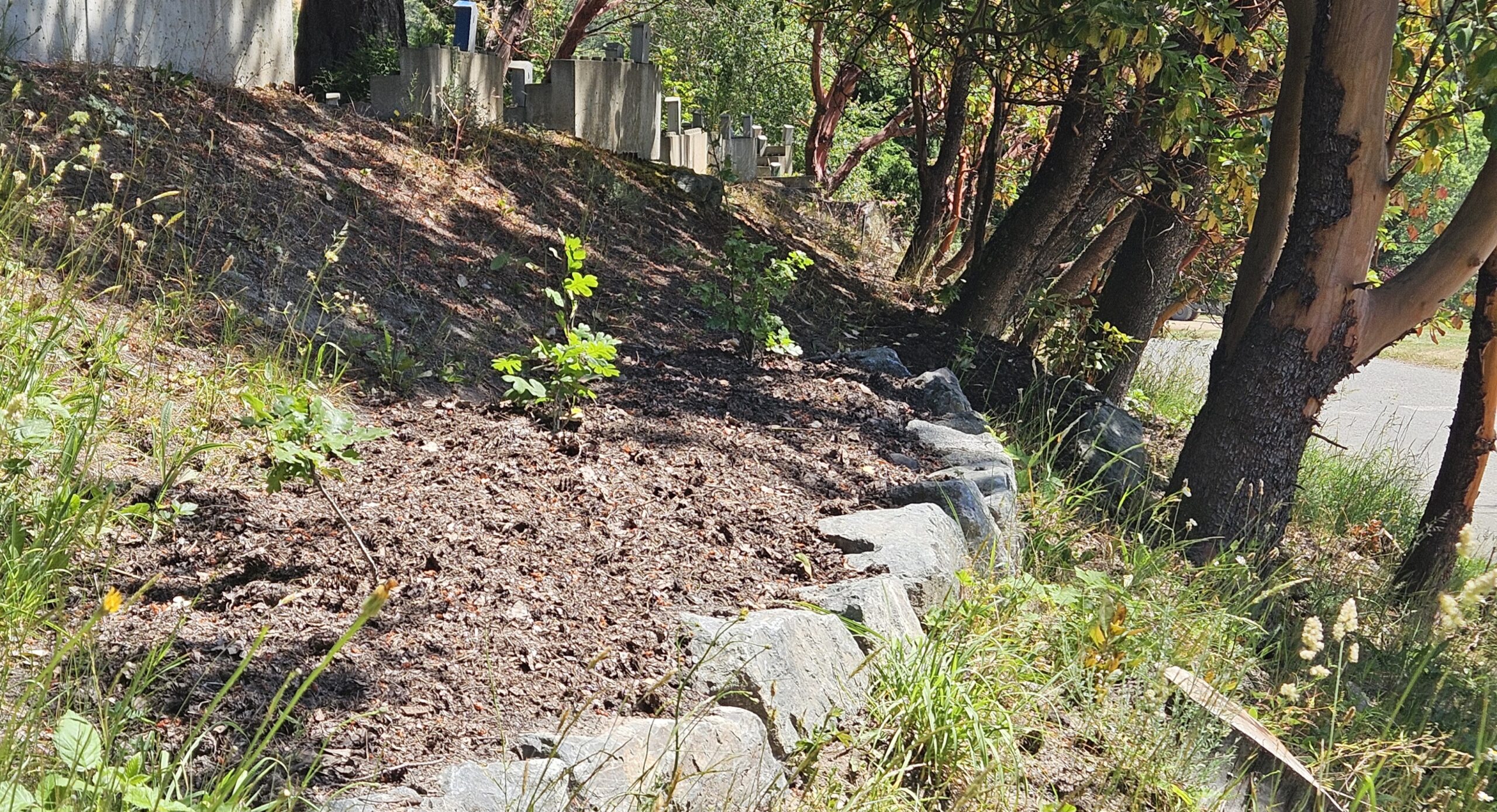
Photo by Judith Carder. GOMPS Garry oak seedlings at the Little Spirits Garden in Royal Oak Burial Park. May 2026.
We are delighted to share an update on several Garry oak seedlings that recently found a new home at the Little Spirits Garden in Royal Oak Burial Park.
Earlier this year, retired minister David Spence visited the Garry Oak Meadow Preservation Society nursery, made a donation in support of our work, and selected a number of locally grown Garry oak seedlings for planting at the Burial Park.On April 22, Earth Day, after the seedlings had been planted by Royal Oak Burial Park staff, David conducted a Tree Blessing ceremony to mark the occasion and celebrate the beginning of the trees’ long lives in this special place.
The photographs below show the young oaks leafing out in their new home. Seeing fresh growth on these seedlings is always rewarding, particularly when they have been planted in a setting dedicated to remembrance, reflection, and connection with the natural world.
As Garry oak ecosystems continue to decline across their range, every new planting contributes to the future of this remarkable species and the hundreds of plants, insects, birds, and other organisms that depend upon it.
We extend our thanks to David Spence and the staff at Royal Oak Burial Park for helping to create a lasting legacy through the planting and stewardship of these young Garry oaks.
We look forward to watching them grow for generations to come.
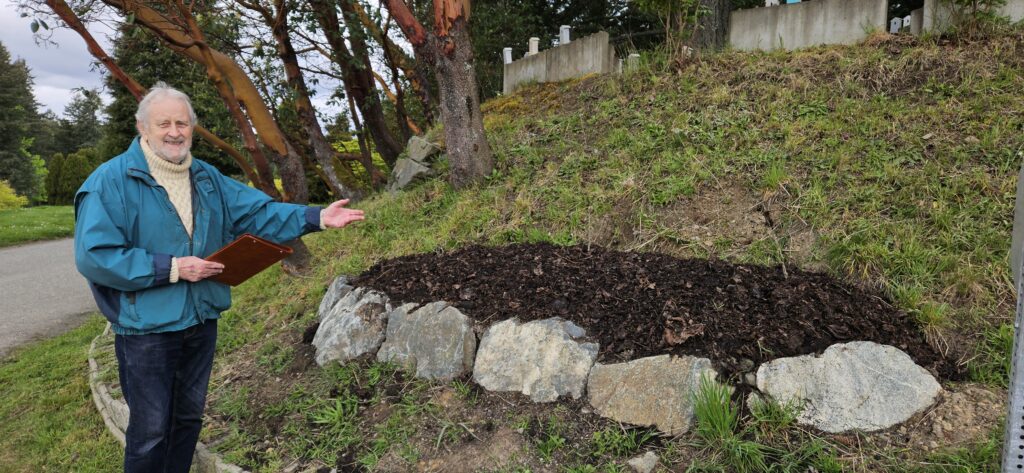
Photo by Judith Carder. Retired minister, David Spence gave a Tree Blessing on April 22, 2026, for GOMPS Garry oak seedlings at the Little Spirits Garden in Royal Oak Burial Park. Tree Blessing
ROB P / ROYAL OAK BURIAL PARK
TREE BLESSING on Earth Day 22 April 2026
LITTLE SPIRIT GARDENS
Under the waning Moon above
(moving from New to Full, as opposed to waxing)
and upon the soil of the Sacred Earth beneath;
where all people hold scared memories, stories, and future hopes.
We gather to bless the young Garry Oak tree saplings
that have been planted in this Little Spirits Garden,
and now are emeging into leaf and fresh vegetation.
We bring our dreams and aspirations
that are grounded in the terra firma —
the terrain — of this Garden of Beauty
This Garden also holds the life of young children
whose Spirits roam in a far and distant realms.
We bring our hearts and souls into this space and this moment
as a sign, a symbol, indeed even a sacrament
to befriend the ancient wisdom of the trees and other living beings
who have brought us to be who we are
and how we are to be one with another.
This is our story. This is our song.
Let the rhythm of the drum be the heart beat of Life and Vitality
Of Resurrection……Reincarnation…..Reviresence……Reciprocity
As we come to meet the Garry Oak
and become acquainted with each of them
in all their manifestations…….the species…….the geniuses
Theses young saplings are today
what is known as those beings who are an integral part of the
UNDERSTORY
who compose a melody wtih mycelium …..
and are bursting forth with energy.
They are not yet the OVERSTORY
of the great canopies of anicent elders…..and memory holders
They are young pioneers
seeking to embody and embolden life
with their particulraity of genes, DNA, Chromosomes
They are playfully engaged with “fungi”
with nutrients, ferns, wildflowers, and other souls;
seeking to find their own voice in this Garden
for they live and move
with a different logic and a different way of knowing.
This is our story. This is our song.
GARRY OAK BLESSING
May the rains fall softly upon your branches and leaves
May the winds blow gently in all your days
May the sunshine radiate warmth on your face
May the soil bring you nourishment to your roots, your trunk, your canopy
May love and kindness, joy and peace,
always abide and abound in your soul
Until we meet again
May the Holy Spirit and the Sacred Quaternity SACRED QUATREAUX
bless you,
and keep you comforted and free among all your siblings
to live in Faith, Fullness of being, and Future ways of wonder and wisdom
This is our story. This is our song
Let your touch remain forever as a kiss upon your cheek
And a prayer in your body.
As we give a BLESSING to trees; the TREES in turn send a blessing back
to those who give in Reciprocity, Conviviality, & Symbiosis.
…….acorns to be distributed…….
-
Bring the Bluebird Back movie
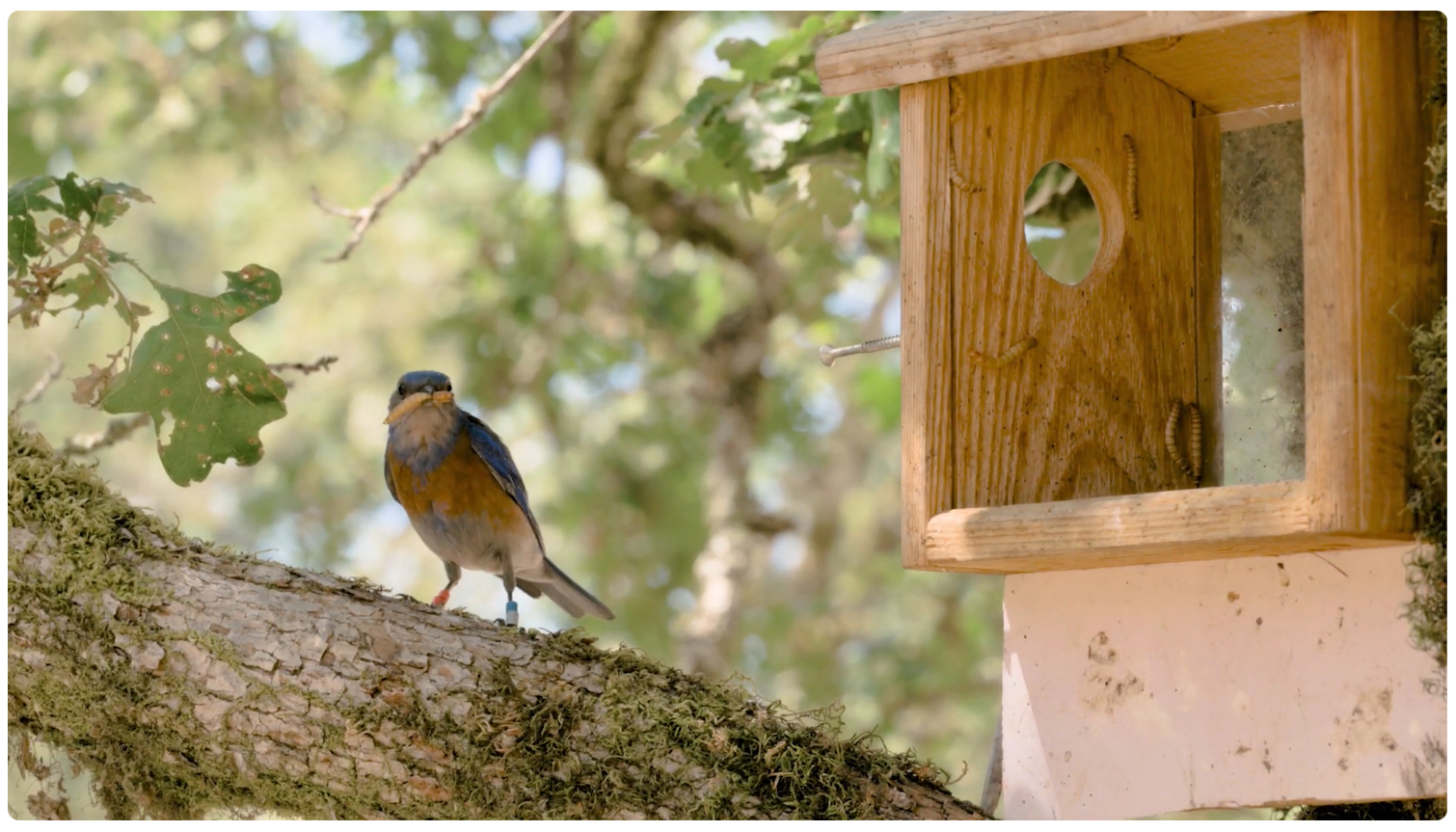
Thanks to the generosity of videographer Spencer Anderson, the Cowichan Bring Back the Bluebirds Project now has a beautiful film to help share this inspiring work with the community.
This 8-minute video highlights the dedication, collaboration, and care behind the ambitious effort to restore Western Bluebirds to Vancouver Island. Deeply connected to the loss of Garry oak meadows and habitat, the film explores both the challenges these birds have faced and the hopeful work being done to bring them back.
Led by the Garry Oak Ecosystem Recovery Team in partnership with the Cowichan Valley Naturalists Society, this project is a powerful example of conservation in action.
Take a few minutes to watch and learn more about the effort to return these vibrant birds to our landscapes.
-
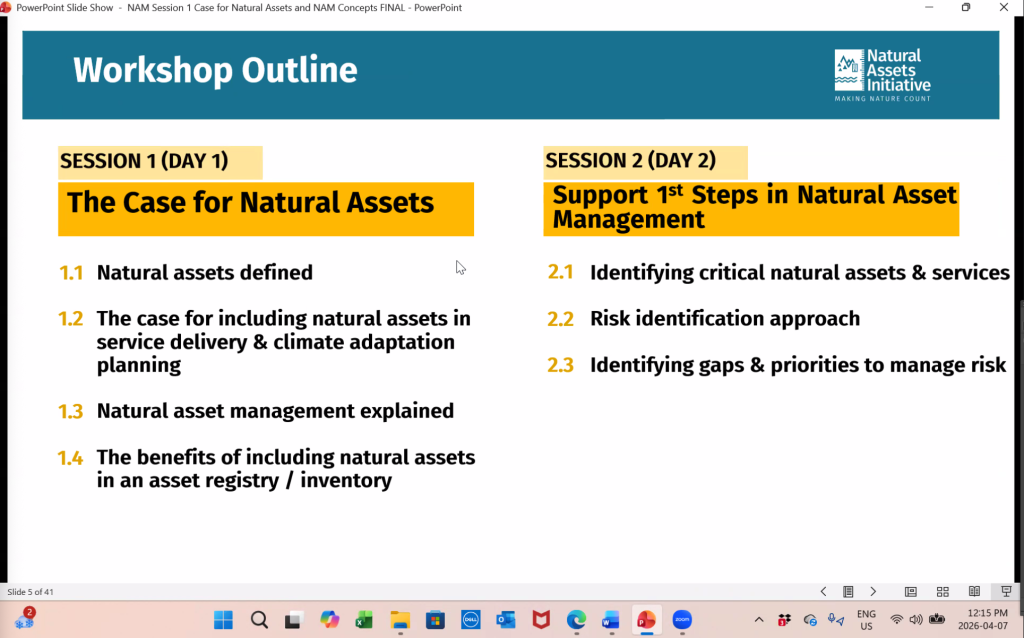
Natural Asset Management Workshop
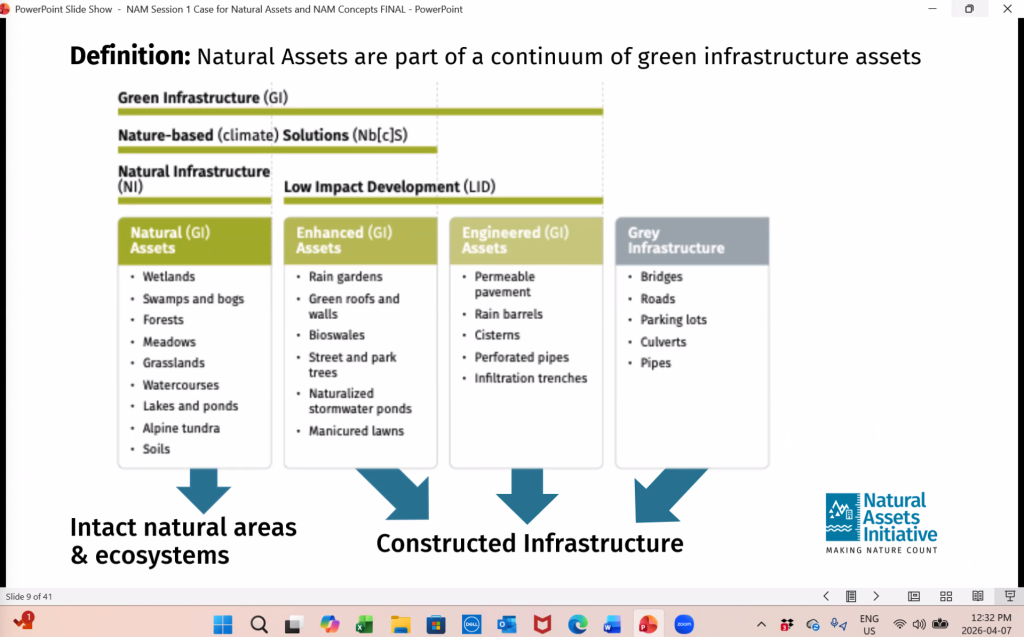
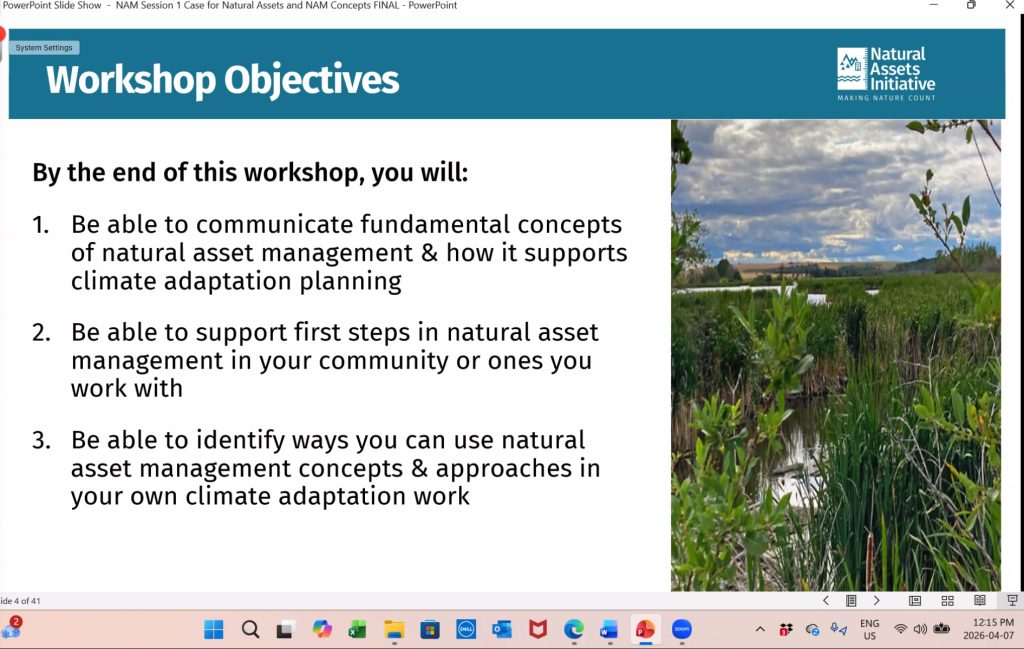
GOMPS Directors were fortunate to join a two-day workshop for the Natural Asset Management Fundamentals Workshop at Natural Assets Initiative on April 7th and April 9th, 2026. Please watch the video to understand what is natural asset management.
Biodiversity loss and climate change constitute a twin crisis in which accelerating habitat destruction, species extinction, and climate disruption reinforce one another in a negative feedback loop. Since 1970, 70% of vertebrate populations have vanished, with land-use change, overexploitation, and climate change driving up to 1 million species toward extinction. Addressing these together is vital, as nature loss hampers carbon absorption, accelerating global warming, while a warming planet destroys ecosystems.
The online course was about how to think about the natural assets of core infrastructure and the value it brings to our communities. Once they are gone, we really can’t replace them with built infrastructure. They have intrinsic value, are irreplaceable, and have no end of useful life.
We all have a responsibility to ensure the services of value provided by the Garry oak ecosystem, and the Garry oak tree can continue to provide multiple service benefits that need to be considered in a holistic approach that supports our communities in an urban environment.
Rather than focusing on aesthetic value, this approach evaluates the stormwater services provided by natural assets—under both current and future climate scenarios—and assigns value to those services. This is especially critical in urban areas, where development pressure often leads to the loss of these systems.It also requires a direct comparison between the costs of conventional stormwater management infrastructure and the use of natural asset management. In many cases, intact ecosystems such as Garry oak landscapes provide equal or greater long-term performance at a lower cost, while also delivering additional co-benefits that engineered systems cannot replicate.
Screenshot