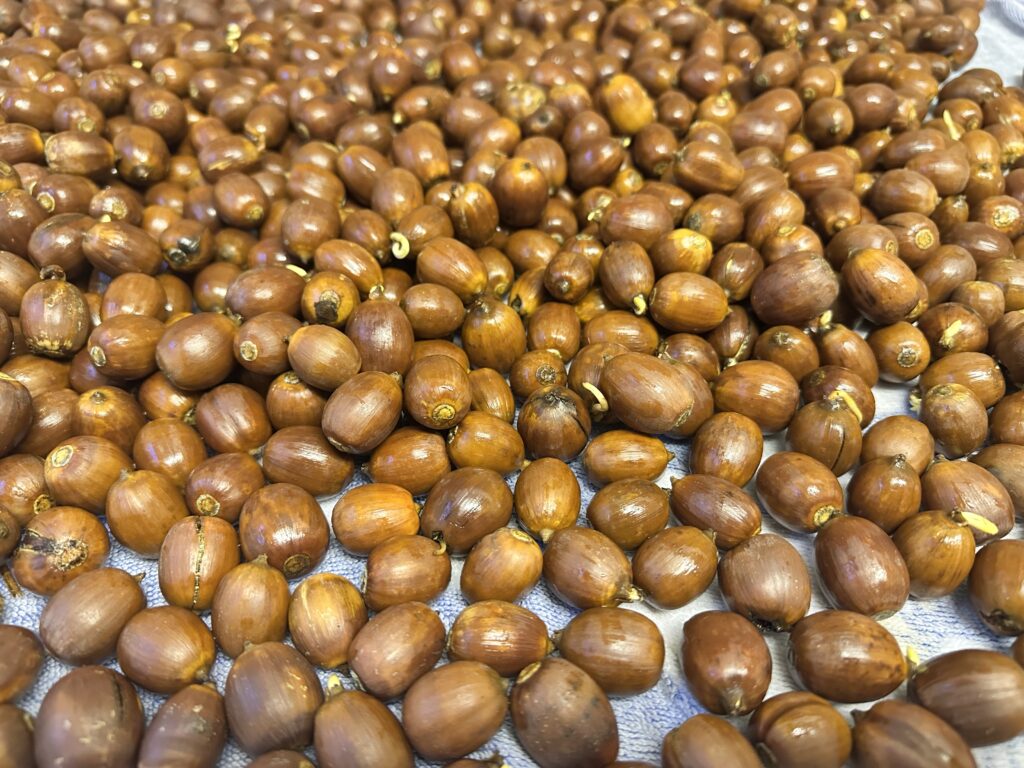
GOMPS’ Volunteer Nursery relies on acorn donations from the public to grow the next generation of Garry oak seedlings. We greatly appreciate your help stewarding and restoring our local Garry oak population.
Garry oak acorns generally mature from mid-September through mid-October. Before heading out, please read our Garry Oak Acorn Collection Guide.
A few important reminders:
Collect no more than one litre of acorns per person from any one area.
Choose large, brown, mature acorns without caps.
Do not collect green, cracked or damaged acorns, or those with small holes or black dots.
Float-test the acorns in water and discard any that float.
Place cleaned and tested acorns in a heavy-duty black plastic bag.
Label the bag with the municipality and nearest street intersection where the acorns were collected.
Keep the acorns cool and do not allow them to dry out before drop-off.
Respect private property and never trespass while collecting.
Please note that we are calling for acorns only. We cannot accept planted acorns, potted seedlings, transplanted trees or anything in soil.
Acorns may be dropped off at 1545 Eric Road in Saanich. Look for the specially marked Rubbermaid-style container on the left side of the house near the garage.
Thank you for helping GOMPS protect and restore Victoria’s heritage Garry oak landscape—one acorn at a time!
If your property has an older foundation, aging perimeter drains, or underground services that have not been updated, it is worth understanding the condition of those systems before assuming a nearby Garry oak is the problem. The distance between the tree and your infrastructure also matters. Trees within approximately 2 metres (6.5 feet) of aging infrastructure generally warrant closer evaluation than those located farther away.
We are often asked whether Garry oak trees growing near homes or underground utilities are likely to damage buildings, foundations, or pipes. In most cases, the risk is low—particularly for homes built after 1970 using modern construction standards. Where root-related damage does occur, it is usually associated with aging or poorly constructed infrastructure rather than healthy tree roots. Older clay or concrete pipes, deteriorated joints, shallow foundations, inadequate perimeter drainage, and cracked infrastructure are all more susceptible to root intrusion. Tree roots do not penetrate sound concrete, metal, or plastic. Instead, they exploit existing cracks, loose joints, or locations where moisture and nutrients are escaping into the surrounding soil.
A Collaborative Approach
We recommend working with qualified professionals to assess your home’s foundation, perimeter drainage, and underground utilities before making decisions about tree removal. In many cases, infrastructure can be repaired while the tree is successfully retained.
Any excavation within a tree’s Critical Root Zone (CRZ)—also referred to as the Protected Root Zone (PRZ)—may require authorization under your local tree protection bylaw. For the best outcomes, foundation and drainage contractors should work collaboratively with a qualified arborist to ensure both municipal requirements and tree protection standards are met.
Modern repair techniques often allow aging infrastructure to be upgraded, future root conflicts to be prevented, and mature Garry oaks to remain healthy. This collaborative approach is not only the most effective solution in many situations but is also required under several municipal tree protection bylaws throughout the Capital Regional District.
Frequently Asked Questions
Should I water my Garry oak trees during the summer?
Question
I have several Garry oak trees on my property and I’m wondering if I should be watering them regularly during the summer months. If so, what is the best way to water them, and how much water is needed to make a difference?
Answer
Mature Garry oaks are well adapted to our region’s dry summers, but prolonged drought and changing climate conditions can place them under additional stress—particularly in urban settings where soils may be compacted or disturbed.
The general recommendation is to water deeply and infrequently, rather than providing frequent light watering. Deep watering encourages roots to grow deeper into the soil where moisture remains available for longer.
The ideal watering schedule depends on several factors, including:
Soil type and drainage
The current health of the tree
Whether the surrounding area has been disturbed by construction, excavation, or changes in grading
For a healthy tree growing in average soil conditions, a deep soaking every two to three weeks during extended dry periods is generally sufficient. Water slowly until the soil within the tree’s dripline (the area beneath the outer edge of the canopy) is thoroughly moistened and slight surface puddling begins.
For best results:
Water early in the morning or in the evening to reduce evaporation.
Concentrate water beneath the canopy rather than directly against the trunk.
Allow the soil to absorb the water slowly rather than applying it quickly.
During periods of extreme heat or prolonged drought, or if your tree is showing signs of drought stress (such as premature browning or leaf drop), more frequent watering may be beneficial. In severe conditions, watering once or twice per week may help reduce stress.
I found strange larvae and discoloured leaves on my Garry oak. Should I be concerned?
Question
I have a large Garry oak on my property, and I’ve noticed discoloured leaves with unusual larvae on the undersides. Do I need to do anything to protect the tree?
Answer
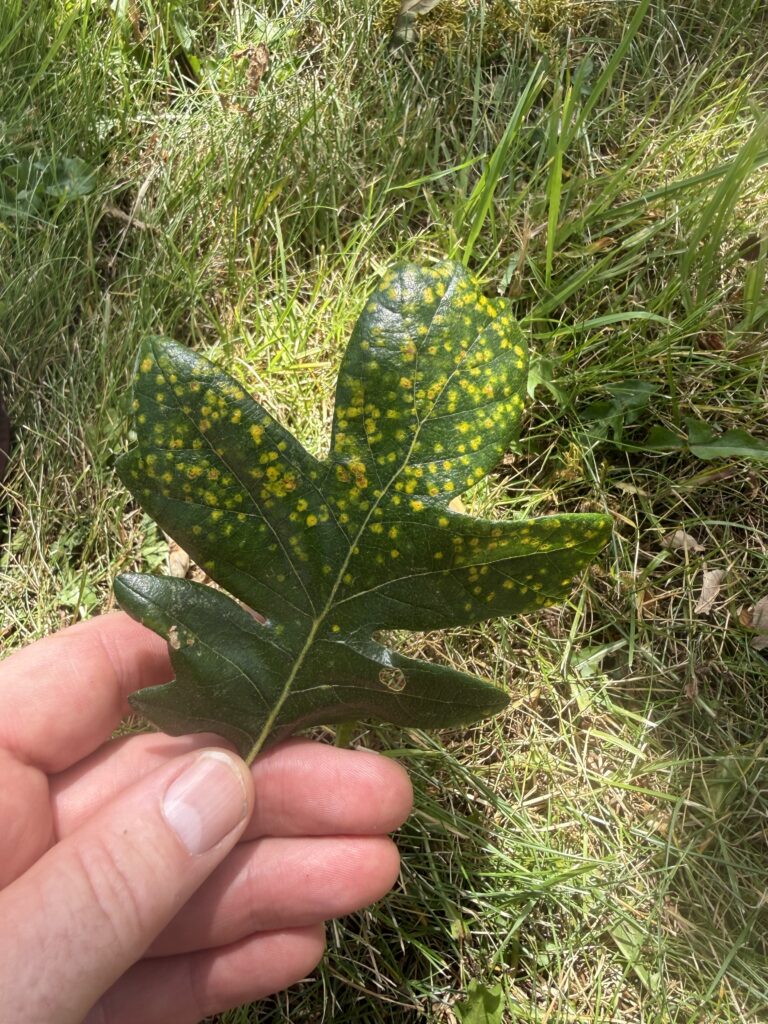
The symptoms you describe are consistent with the jumping gall wasp (Neuroterus saltatorius), an introduced insect that forms tiny galls on Garry oak leaves.
While heavy infestations can cause leaves to appear scorched or discoloured and may occasionally weaken small twigs or branches, healthy mature Garry oaks generally tolerate these outbreaks well.
Current management recommendations are to allow nature to take its course. Native predators and naturally occurring biological control agents help regulate jumping gall wasp populations over time, and pesticide treatments are generally not recommended.
You may notice:
Small round galls on the undersides of leaves
Leaf yellowing, browning, or scorching
Occasional shedding of small twigs or branches following severe infestations
Continue to monitor your tree and help reduce drought stress by watering appropriately during extended dry periods if needed. If you observe widespread branch dieback, significant canopy decline, or other signs of poor health, consider consulting a qualified arborist experienced with Garry oaks.
For more detailed information about the jumping gall wasp and current management recommendations, see:
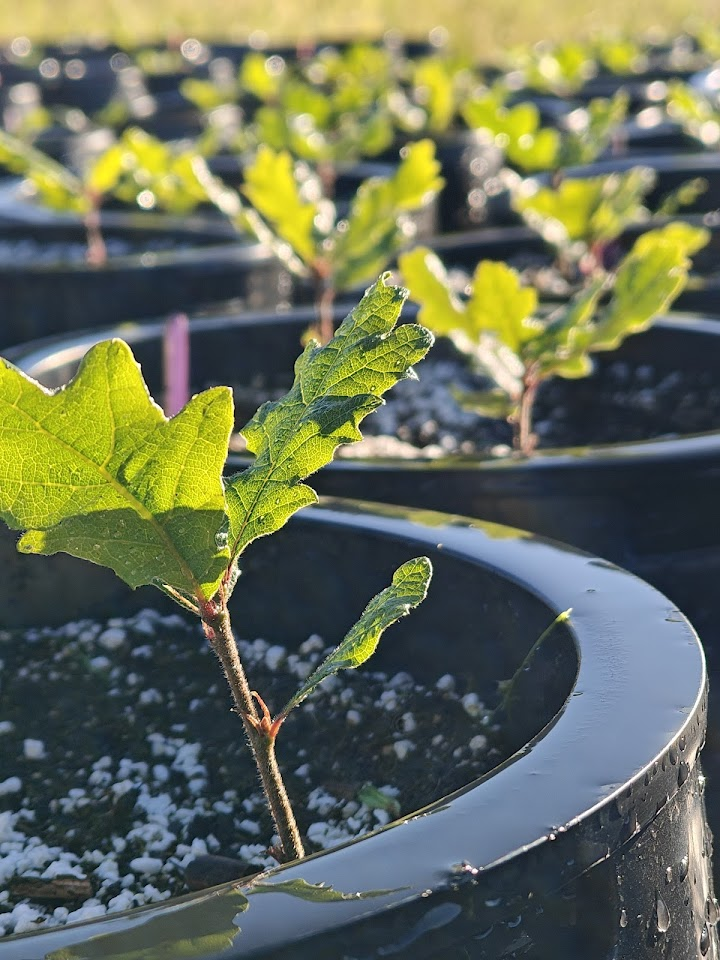
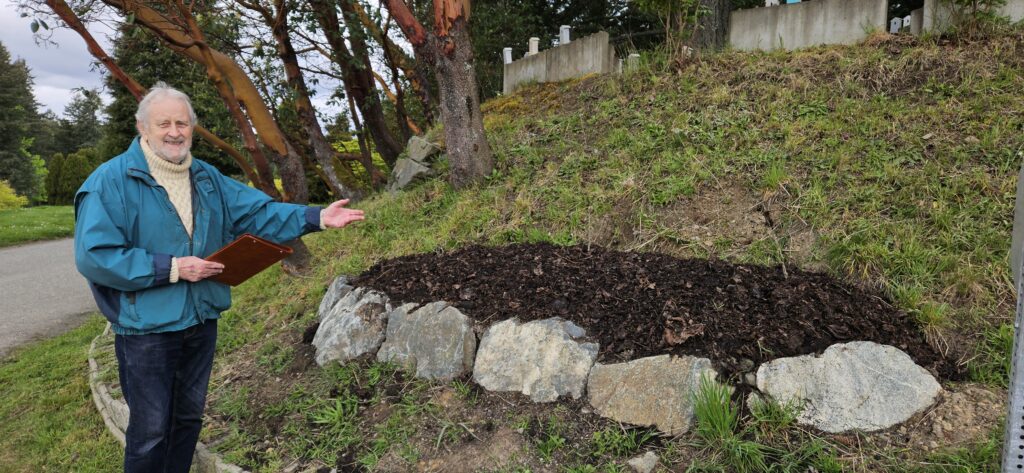
Photo by Judith Carder. GOMPS Garry oak seedlings at the Little Spirits Garden in Royal Oak Burial Park. May 2026.
We are delighted to share an update on several Garry oak seedlings that recently found a new home at the Little Spirits Garden in Royal Oak Burial Park. Earlier this year, retired minister David Spence visited the Garry Oak Meadow Preservation Society nursery, made a donation in support of our work, and selected a number of locally grown Garry oak seedlings for planting at the Burial Park.
On April 22, Earth Day, after the seedlings had been planted by Royal Oak Burial Park staff, David conducted a Tree Blessing ceremony to mark the occasion and celebrate the beginning of the trees’ long lives in this special place.
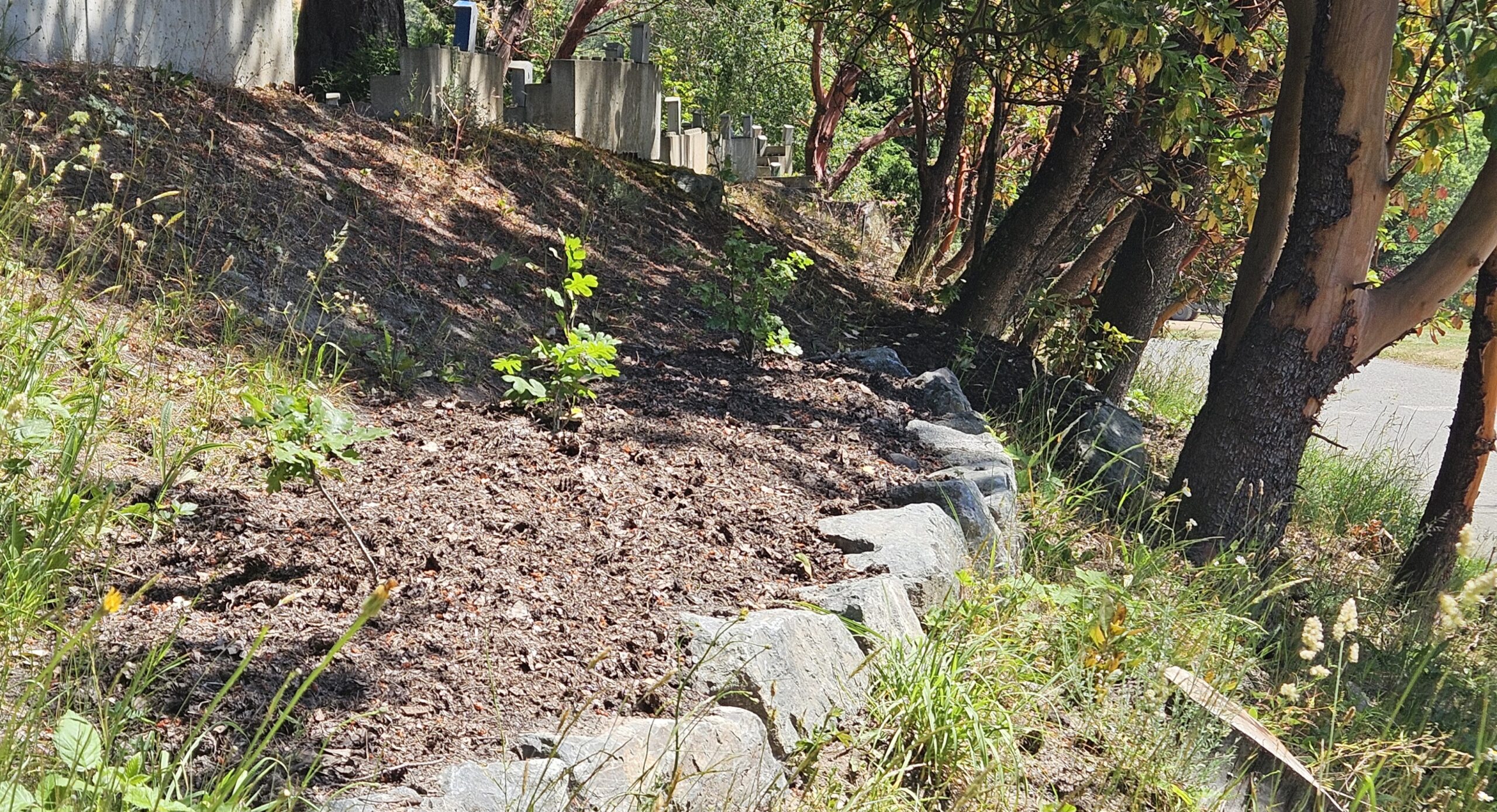
The photographs below show the young oaks leafing out in their new home. Seeing fresh growth on these seedlings is always rewarding, particularly when they have been planted in a setting dedicated to remembrance, reflection, and connection with the natural world.
As Garry oak ecosystems continue to decline across their range, every new planting contributes to the future of this remarkable species and the hundreds of plants, insects, birds, and other organisms that depend upon it.
We extend our thanks to David Spence and the staff at Royal Oak Burial Park for helping to create a lasting legacy through the planting and stewardship of these young Garry oaks.
We look forward to watching them grow for generations to come.
Photo by Judith Carder. Retired minister, David Spence gave a Tree Blessing on April 22, 2026, for GOMPS Garry oak seedlings at the Little Spirits Garden in Royal Oak Burial Park.
Tree Blessing
ROB P / ROYAL OAK BURIAL PARK
TREE BLESSING on Earth Day 22 April 2026
LITTLE SPIRIT GARDENS
Under the waning Moon above
(moving from New to Full, as opposed to waxing)
and upon the soil of the Sacred Earth beneath;
where all people hold scared memories, stories, and future hopes.
We gather to bless the young Garry Oak tree saplings
that have been planted in this Little Spirits Garden,
and now are emeging into leaf and fresh vegetation.
We bring our dreams and aspirations
that are grounded in the terra firma —
the terrain — of this Garden of Beauty
This Garden also holds the life of young children
whose Spirits roam in a far and distant realms.
We bring our hearts and souls into this space and this moment
as a sign, a symbol, indeed even a sacrament
to befriend the ancient wisdom of the trees and other living beings
who have brought us to be who we are
and how we are to be one with another.
This is our story. This is our song.
Let the rhythm of the drum be the heart beat of Life and Vitality
Of Resurrection……Reincarnation…..Reviresence……Reciprocity
As we come to meet the Garry Oak
and become acquainted with each of them
in all their manifestations…….the species…….the geniuses
Theses young saplings are today
what is known as those beings who are an integral part of the
UNDERSTORY
who compose a melody wtih mycelium …..
and are bursting forth with energy.
They are not yet the OVERSTORY
of the great canopies of anicent elders…..and memory holders
They are young pioneers
seeking to embody and embolden life
with their particulraity of genes, DNA, Chromosomes
They are playfully engaged with “fungi”
with nutrients, ferns, wildflowers, and other souls;
seeking to find their own voice in this Garden
for they live and move
with a different logic and a different way of knowing.
This is our story. This is our song.
GARRY OAK BLESSING
May the rains fall softly upon your branches and leaves
May the winds blow gently in all your days
May the sunshine radiate warmth on your face
May the soil bring you nourishment to your roots, your trunk, your canopy
May love and kindness, joy and peace,
always abide and abound in your soul
Until we meet again
May the Holy Spirit and the Sacred Quaternity SACRED QUATREAUX
bless you,
and keep you comforted and free among all your siblings
to live in Faith, Fullness of being, and Future ways of wonder and wisdom
This is our story. This is our song
Let your touch remain forever as a kiss upon your cheek
And a prayer in your body.
As we give a BLESSING to trees; the TREES in turn send a blessing back
to those who give in Reciprocity, Conviviality, & Symbiosis.
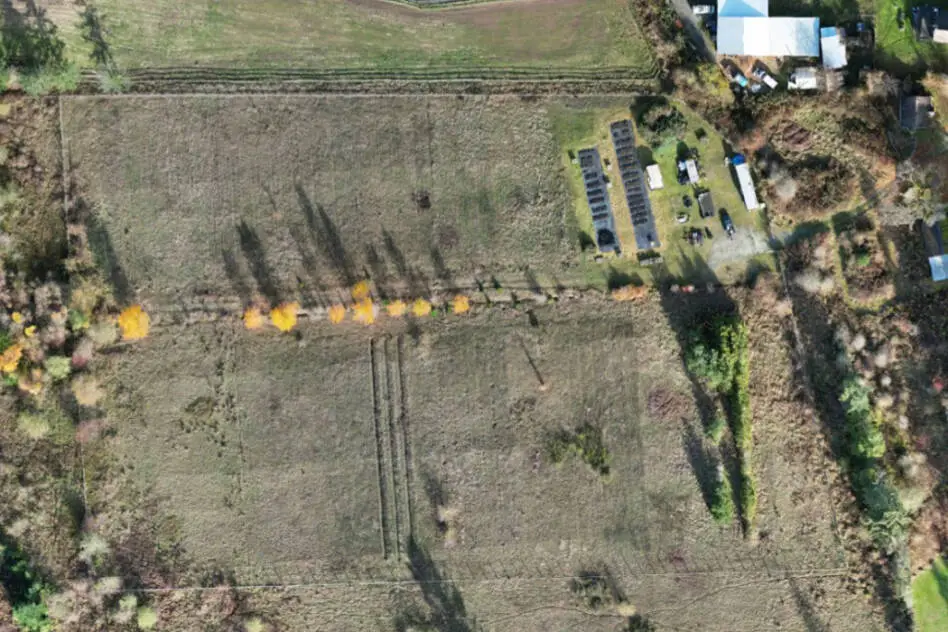
Bear Hill Farm, viewed from above in 2025, is a pilot project in partnership with the Capital Regional District to develop and maintain an agriculture focus activating under utilized lands for food production. (CRD report) Read more at: https://vicnews.com/2026/02/03/saanichs-bear-hill-gets-ready-for-5-year-crd-farm-pilot-program/
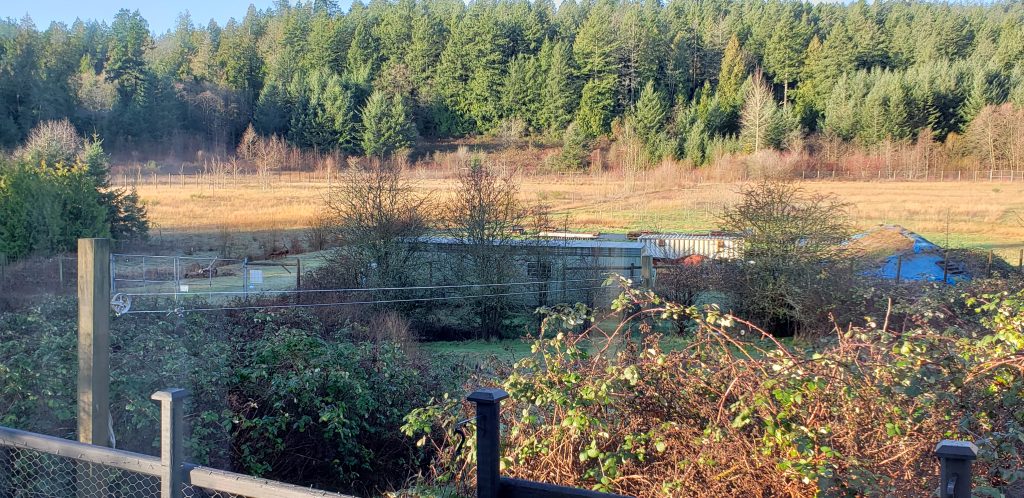
A regional park is almost ready to raise farmers on a recently revamped tree nursery in Saanich. A plot in Bear Hill Regional Park serves as a pilot project for the Capital Regional District, under its new Foodlands Access Service established in February 2025. Fallow nearly a decade, with only a small portion used as by the Garry Oak Meadow Preservation Society as a seedling nursery, and previously used as a City of Victoria nursery, CRD staff are now seeking final board approval to use the land for a five-year farm pilot.
Dubbed a farmer-incubator site, the district already allocated a partnership of Haliburton Community Organic Farm Society and LifeCycles Project Society to operate the site, the regional parks committee heard during its Jan. 28 meeting.
Haliburton has two decades of experience in farm incubation and agricultural land management, with a focus on supporting certified organic and regenerative farming practices. LifeCycles is a regional leader in food literacy and security.
Preliminary preparation started in November, according to an information report shared with the committee. That work included clearing brush, invasive plants, trees and stumps alongside soil sampling and testing. Building a base is anticipated to continue the first half of 2026, with a focus on building out farm infrastructure, remediation and policy development including refinement of the farmer application process, land agreements and tenancy responsibilities. The Farmland Access Service aims to use the existing house, with some investment for safety upgrades, to support farm operations. The plan includes removal of a dilapidated barn on the property. The plan is to have farmers selected and accessing the land at 5920 Patricia Bay Hwy by August.
Air-Pruned Seedlings Distributed to Saanich, Victoria, and Langford
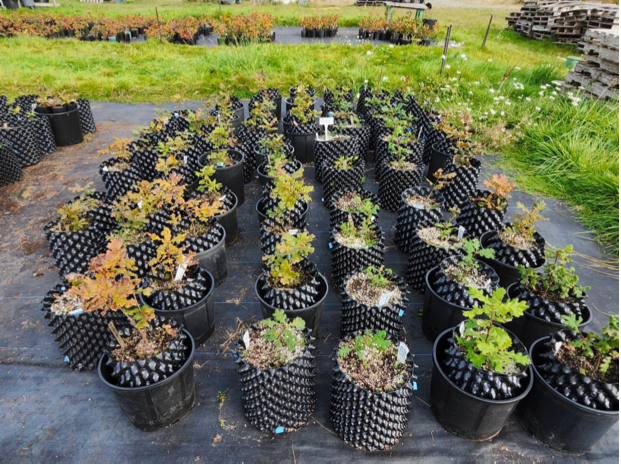
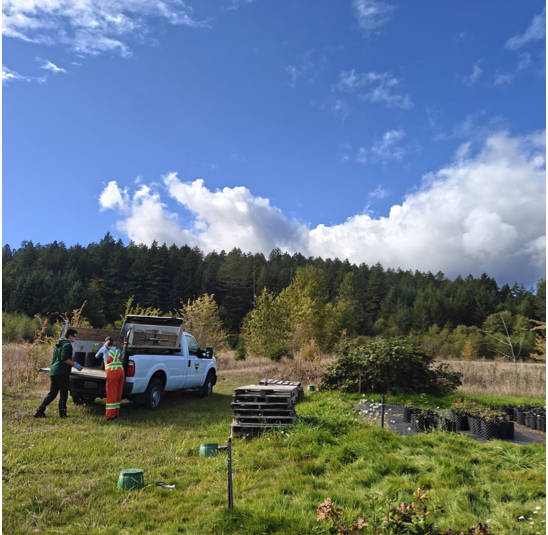
Photo by Ryan Senechal. Pick up by Saanich Municipality staff. October 2025.
A total of 117 air-prune pots were distributed to the municipalities of Saanich, Victoria, and Langford. Most of these seedlings were grown from acorns in two growing seasons or less.
The best part is that the recipients are well prepared to provide the establishment care these seedlings need to reach their full potential.
Even more exciting, the City of Victoria’s Supervisor of Horticulture and Manager of Parks visited our nursery to inspect the quality of our air-pruned stock. We are happy to share that they were very pleased with what they saw, expressed strong interest in our trees, and were eager to explore further collaboration—especially around tracking the location and establishment of GOMPS seedlings in the community.
Thank you to everyone who helped pull this order together, as well as those who assisted with the additional orders fulfilled from our nursery stock. It was a true team accomplishment.
It is also wonderful to see two big new gaps on the nursery fabric, making plenty of room for our 2025 acorns.
In 2023 GOMPS applied for a Nature-based Climate Action Grant administered by the Victoria Foundation for key infrastructure and maintenance investments for sustainability of the GOMPS Garry Oak Volunteer Nursery.
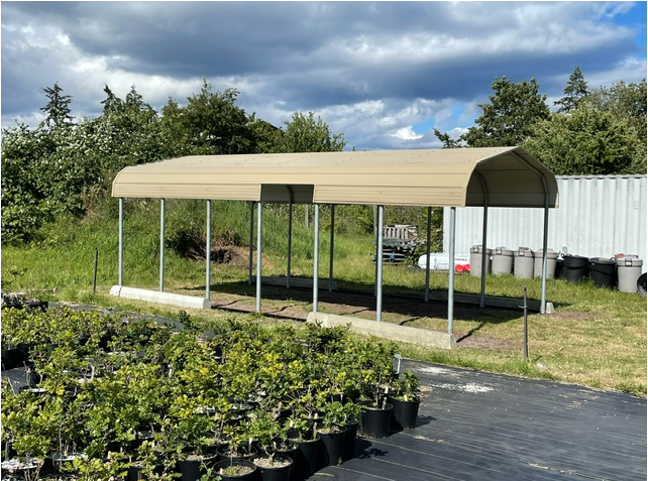
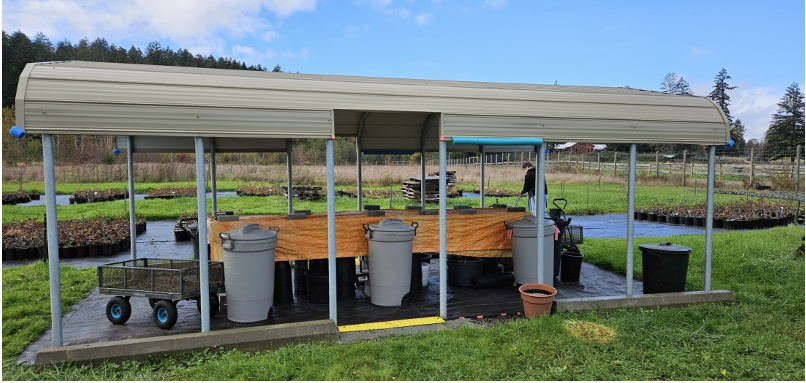
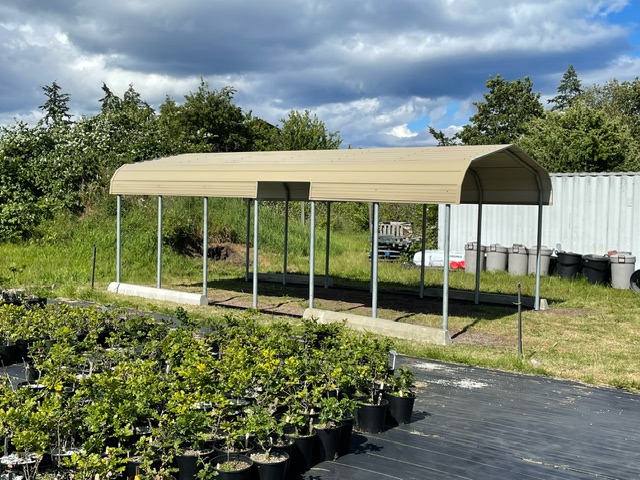
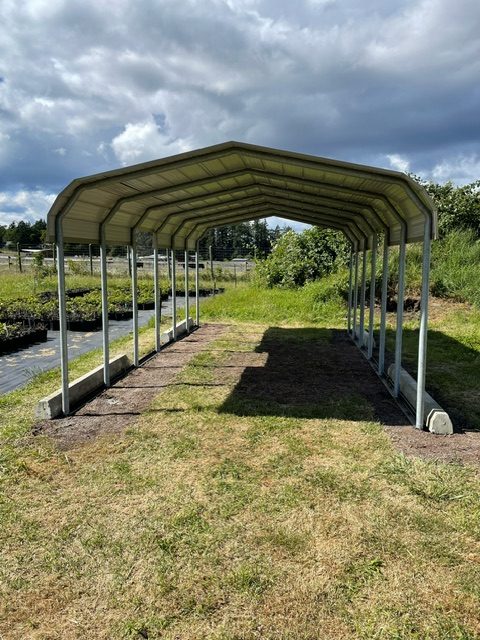
In 2024 GOMPS received a $13,000 grant to assist with Nursery costs including the erection of a secure and safe work shelter for nursery volunteers having lost 2 previous shelters due to wind, snow & storm damage.
GOMPS thanks Volunteer Susan Grant who researched shelters, arranged & supervised installation of the shelter and Volunteer Marion Nyberg for making the shelter’s accesses safe for volunteers & visitors.
The latest Nursery shelter made it through its first winter enabling volunteers to better enjoy the workparties at the Volunteer Nursery!
Picture by Judith Carder. GOMPS Nursery new work shelter.
After some hard work by Judy and Susan on Thursday to prep the base and today lining the interior with landscape fabric, our new shelter is ready for us to reinstall our workspace. The Tee Cee crew of Mike and Mike did a great job on Saturday. Another big thanks to Judy for being on site bright and early to let them in to get started. And thanks again to Judith for getting us the funds from the Victoria Foundation for this project.
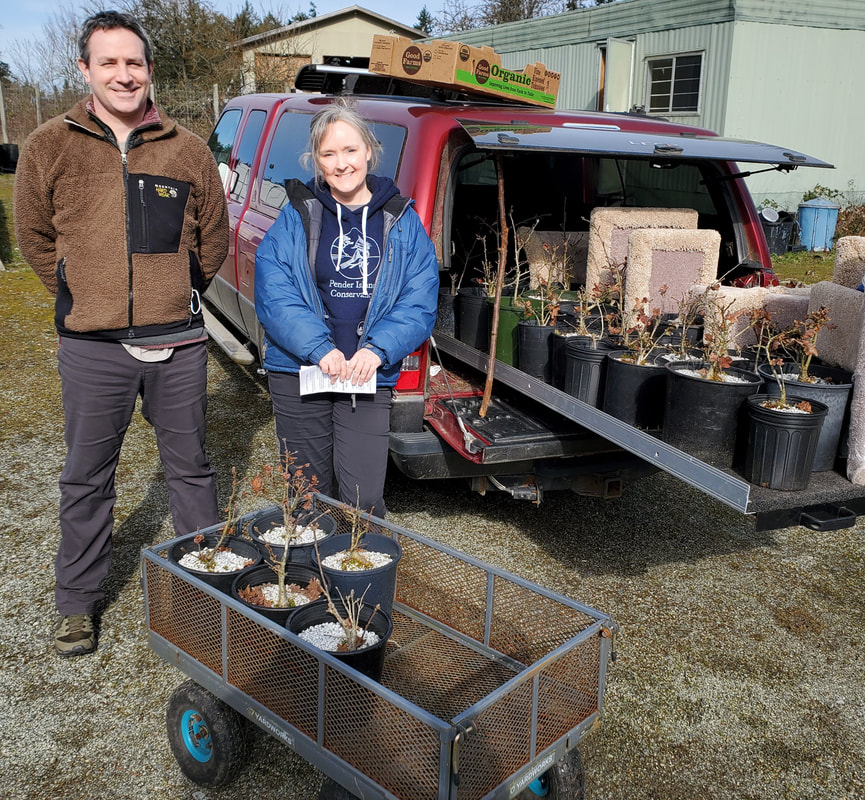
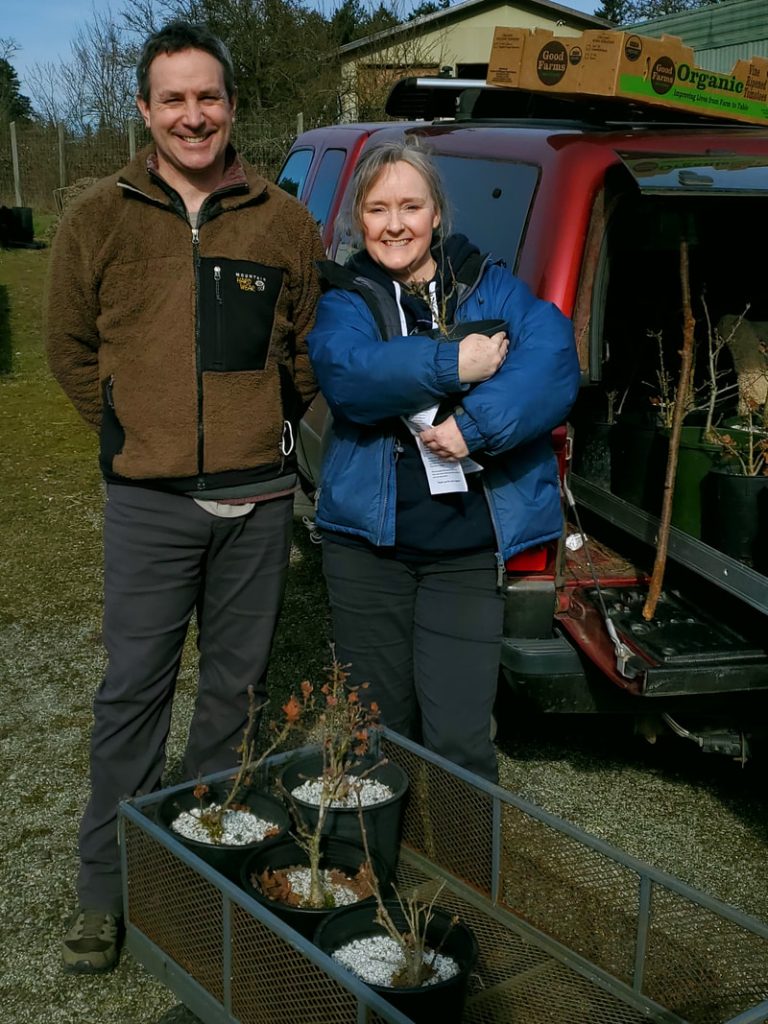
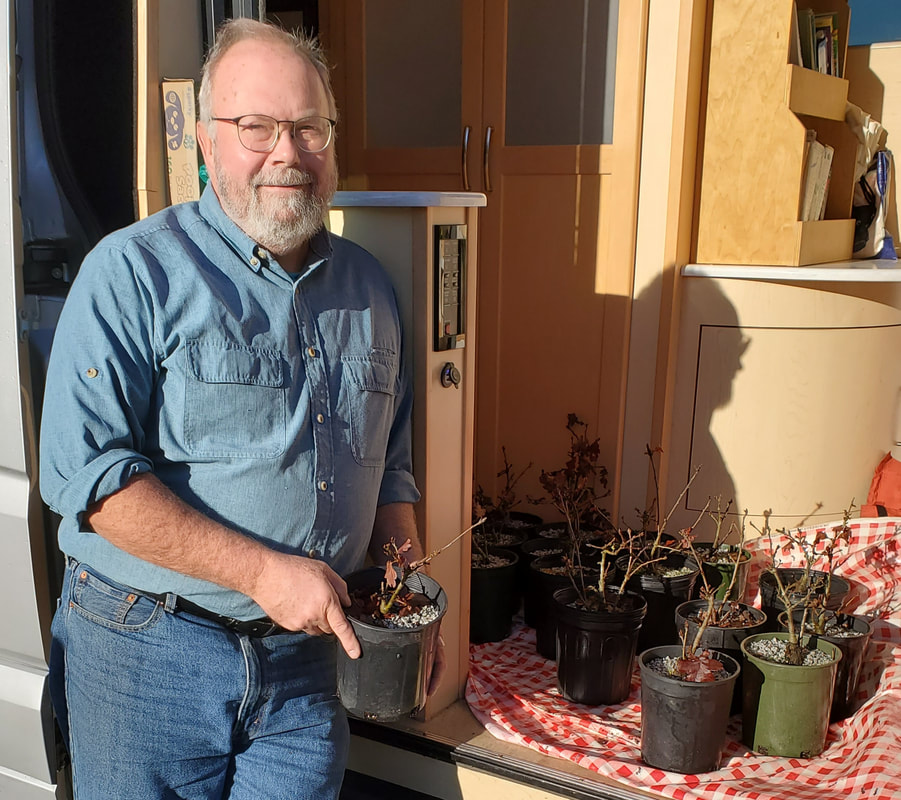
Last February 23, 2022, Dr. Erin O’Brien & Dan Baxter with the Pender Islands Conservancy picking up 40 of our Garry oak seedlings for new homes on the Pender Islands. Quoting Dr. Erin here, “Thank you and all your volunteers for all you do to help restore Garry Oak ecosystems!”
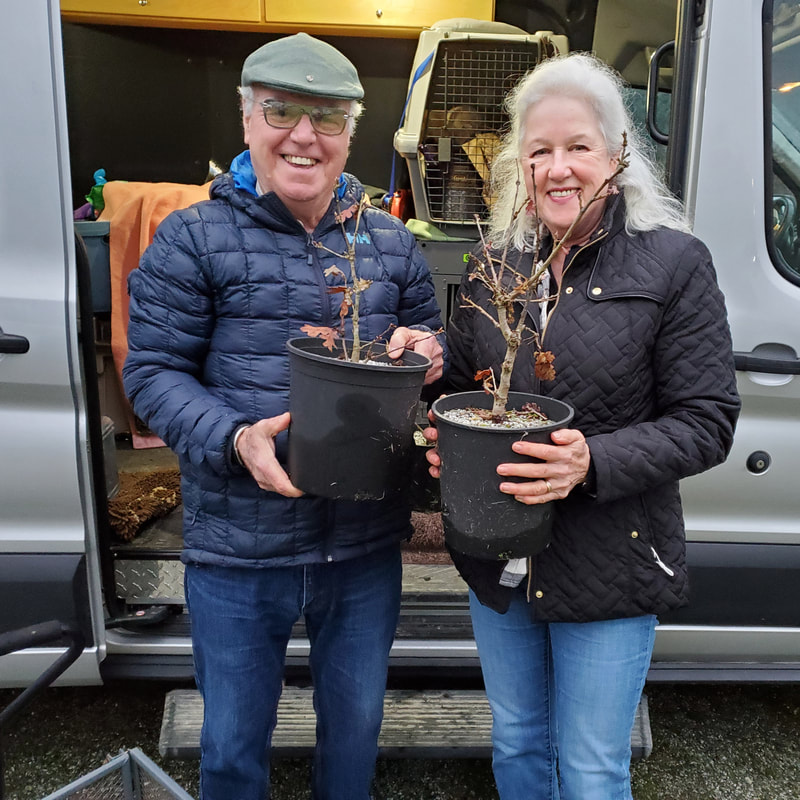
Last December 7, 2021, Ms. Maxine Moiner and partner picked up 10 x 2 gal seedlings for new home in Errington. And so, on behalf of everyone here at the Garry Oak Meadow Preservation Society we are very grateful for your support.
We would like to extend our gratitude to Mr. Malcolm McCartney of Duncan, who is creating a Garry oak ecosystem on his property. He picked up 20 of our volunteer nursery seedlings.