
Trail construction in Nanaimo, B.C., dug up a rare slimleaf onion patch, exposing the lack of protection for endangered Garry oak ecosystems
March 3, 2026 9 min. read
https://thenarwhal.ca/nanaimo-slimleaf-onion-disturbed/
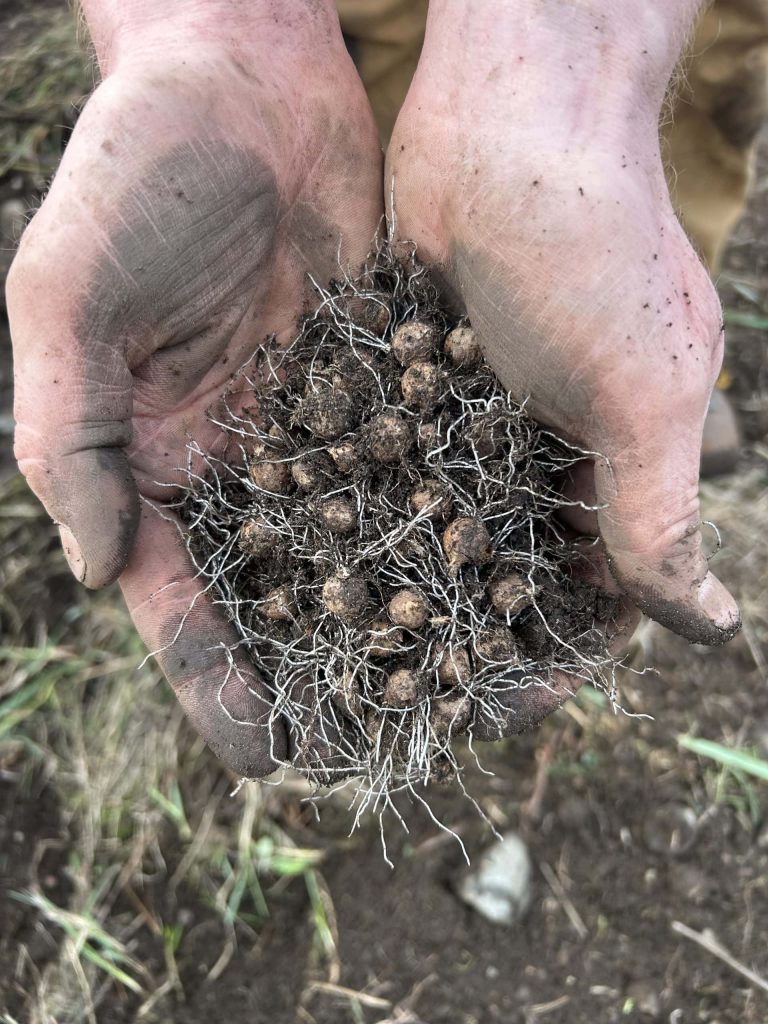
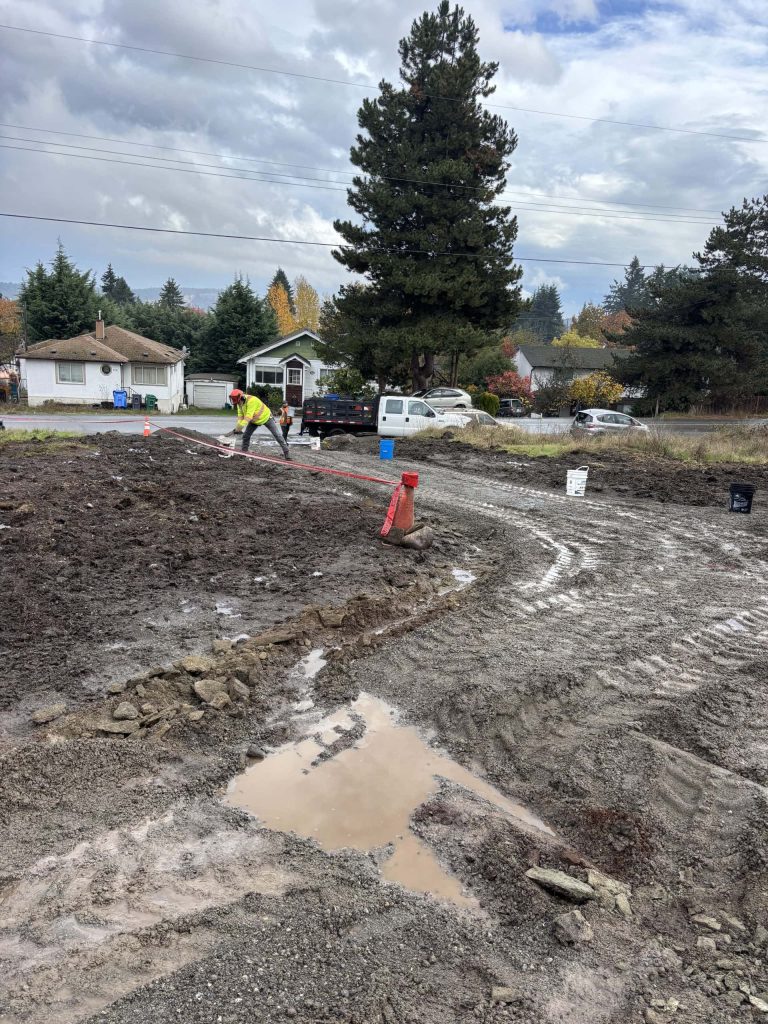
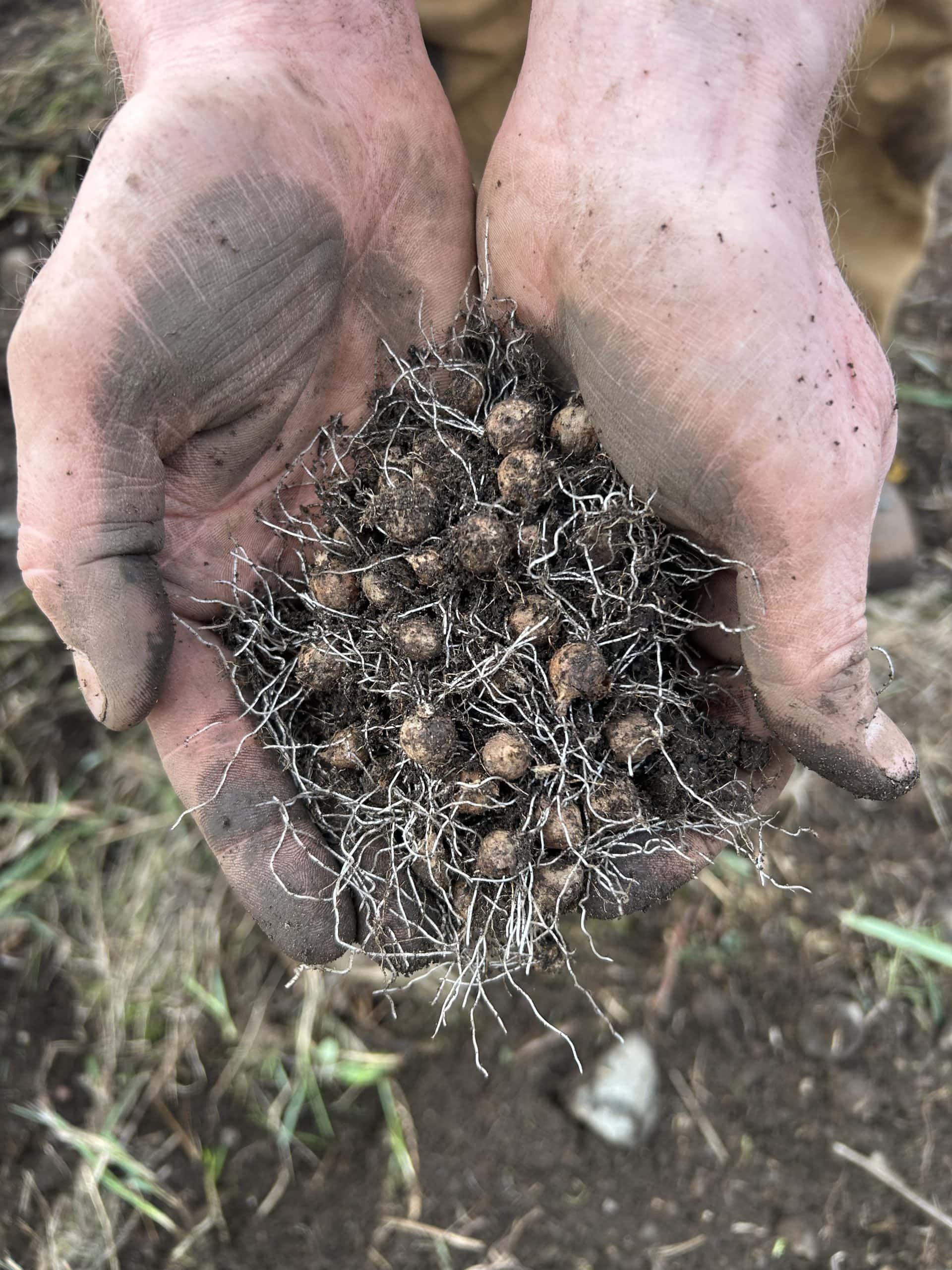
Residents in Nanaimo, B.C., became concerned when they realized that rare — and tiny — slimleaf onion bulbs were dug up to build a new trail. Photos: Supplied by Hunter Jarratt
Michael Geselbracht was out for a Saturday run in Nanaimo, B.C., when he came across soil piled up in a special area he knew was part of a native Garry oak ecosystem.
That particular spot — across from a row of houses on View Street, parallel to a railway — had been an improbably dense and thriving meadow of a native plant called slimleaf onion. The patch was something of a terrestrial island, approximately 50 square metres surrounded by introduced grasses and weeds. Still, the onions persisted. They had given an especially impressive show of white and the rarer pink flowers in the last wet spring.
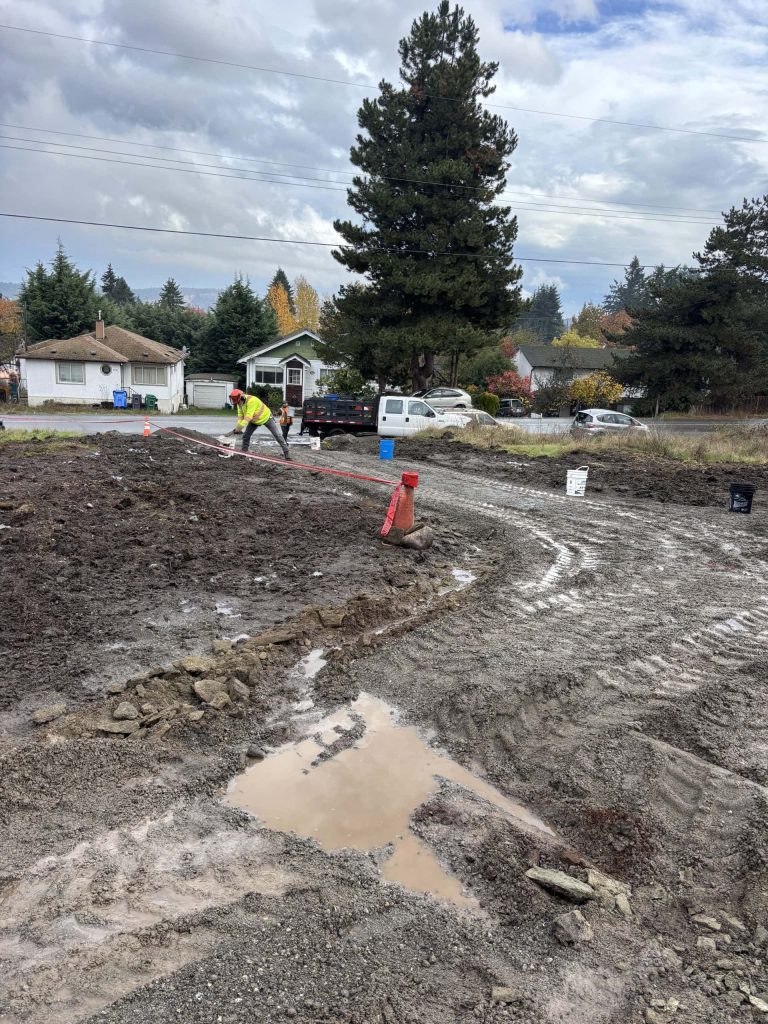
But in October 2025, thousands of nickel-sized bulbs were turned up by heavy machines and strewn like pebbles across the soil’s surface when the meadow became a construction site. The transformation was part of an effort to develop a multi-use trail corridor along the railway route by a group called the Island Corridor Foundation — a trail that, unbeknownst even to many local conservationists, routed through the rare patch of slimleaf onions.
Slimleaf onion is a blue-listed species in B.C., designated of “special concern, vulnerable to extirpation or extinction.” But it’s also just one of more than 100 plants and animals on the province’s species-at-risk list in the critically endangered Garry oak ecosystem it belongs to.
The biodiverse and fire-adapted Garry oak ecosystem has been tended by Indigenous Peoples for thousands of years. But after 150 years of settlement, less than five per cent of the Garry oak ecosystem remains in a near-natural state. Some also hang on in remnants like the one on View Street, adulterated by invasive plants, mostly forgotten, hard to spot out of season, disconnected from other Garry oak plant communities and, more often than not, totally legal to destroy.
‘No Garry oak ecosystem that has been unimpacted’
Geselbracht spends most days outside teaching kids to love the natural world in the Nanaimo Forest School. He’s helped restore the local Cat Stream for salmon, and has spent more than 70 hours pulling invasive plants like trailing blackberry and English ivy from his neighbourhood.
Like many Nanaimo residents, he was thrilled with the prospect of more trails — for cycling and for access to more community projects, like the food forest he helped clear from a weedy abandoned lot. It all seemed worth a bit of mud and machines.
“It’s the connectivity, you know — the more that we have these connected trails, the more people start to use them,” Geselbracht says.
But he hadn’t expected the route to go through the native plants; he knew something should be done. So he spread the word and texted pictures of the bulldozed area to others in Nanaimo. Some people salvaged bulbs — a pair of cupped hands can hold more than 50. A biologist living in the neighbourhood stopped by with specific suggestions to prevent further harm. The Nanaimo Area Land Trust sent a letter to the city, imploring them to mitigate the damage. “Even when there’s this tiny remnant, you just feel the loss of it, in terms of death by a thousand cuts,” Linda Brooymans, stewardship manager for the land trust, told The Narwhal.
Since the City and the Island Corridor Foundation were alerted to the presence of the onion, workers have put in small culverts to direct water to the remaining bulbs — the plants rely on seasonal wetlands called vernal pools. They also replaced the soil, laid straw in an effort to protect the site and built a fence to protect the area from foot traffic. By January some of the bulbs were sprouting.
But native plant advocate Hunter Jarratt says the fence caused further disruption and, positioned at the back of the patch, won’t do anything to keep people from walking on the plants. Jarratt knew that spot for the rare slimleaf onion and was shocked to find it scraped to bedrock.
Only the spring will tell if the ground will hold water like it did before, how many of the plants will survive and whether the straw or site disturbance will result in a weed boom. No matter what, Jarratt says the slimleaf onion population will never again be what it was in numbers or genetic diversity.
“It was beautiful, and it’s all gone. And what was the reason, you know?”
At the heart of the ecosystem disappearing act is a simple conflict — the inviting flower-filled meadows occur where people want to live. Fire suppression, aggressive invasive plants and the impact of off-road vehicles adds to the threat.
But there is little legal protection for Garry oak ecosystem remnants — and plants like slimleaf onion often fall through the cracks.
No environmental assessment needed for trail construction
Advocates worry the slimleaf onion, though rare, is not meaningfully protected by any level of government.
Locally, the City of Nanaimo has bylaws protecting trees, like the Garry oaks themselves, and has included known ecosystems for plants like slimleaf onion in environmentally sensitive zoning, which triggers extra requirements like professional assessment and protection during development. Some municipal ecosystems are protected from development by park areas like Nanaimo’s Lotus Pinnatus Park or Victoria’s Beacon Hill Park.
Provincial legislation includes mandates for threatened plant species — but only applies within specified areas, like designated ecological reserves or in public forests (Crown land). The often-narrow parameters for designating protection can also lag behind — for example, the Forest and Range Practices Act hasn’t updated its list of protected plants since 2006. In any case, none of the existing provincial rules would apply to the View Street slimleaf onion.
Neither is slimleaf onion on the list of plants recognized by the federal Species At Risk Act. The plant could potentially benefit tangentially from an ecosystem recovery plan created for five other Garry oak ecosystem plants, though that plan is only automatically enforceable on federal lands — that’s just four per cent of Canada and around one per cent of land in B.C. On private land in B.C.— such as the rail corridor — enforcement is voluntary. On public land, there is “piecemeal legislation” and “non-legal recommendations and guidance,” according to a 2022 audit.
The federal government has the power under the Species At Risk Act to make emergency protection orders, but rarely does.
When City of Nanaimo councillors unanimously approved the path extension in July of 2025, none of the laws protecting species at risk applied. And at just over 700 metres of gravel path, the Island Corridor Foundation project — on private land and not zoned as environmentally sensitive — didn’t require a permit or an environmental assessment.
Charlotte Davis, Nanaimo’s Parks and Natural Areas deputy director, says the small area wasn’t zoned for protection because it wasn’t found during the last assessment — but she’s hopeful imaging advancements will make it easier to find small areas like these in the next one, as early as 2028.
Davis also notes the project has increased access to safe trail for locals but that more engagement before construction “would have allowed us to be more aligned with the local naturalist community, with whom we share so many values, from the outset.”
The plant advocates want to protect the slimleaf onion — and other rare plants — even when they grow outside legislated or bylawed protection areas, like the View Street meadow.
“It wasn’t perfect, but there’s no Garry oak ecosystem that has been unimpacted. This is the best we have left,” Jarratt says.
“How do we control [the disturbance of native ecosystems] if we don’t even have them mapped, or we don’t even know where they are?” he asks.
But B.C.’s Garry oak ecosystem hasn’t been comprehensively mapped since 1993. The last analysis, noting only five per cent of the ecosystem remaining, came from a 2006 study.
With population growth and urban development, advocates say that measurement has changed in the last 20 years.
There are proposed projects in known Garry Ook ecosystem around Nanaimo; residential and industrial development in Cable Bay, nearly 200,000-square-foot data centre on East Wellington Road, housing in Linley Valley and a new subdivision in Harewood Plains — city council has asked provincial and federal governments for help protecting the latter.
Nanaimo zoning bylaws require developers to take extra measures in noted sensitive areas but don’t prohibit new construction.
What is harder to measure are the unmapped survivors on private land — they can be legally built over, perhaps without anyone knowing they were there. “There’s just examples of this kind of stuff happening all the time, everywhere,” Jarratt says.
Vancouver Island railway project hopes to promote sustainability and recreation
The Nanaimo trail expansion is one small part of a larger vision for Vancouver Island’s rail corridor.
The railway was originally built in the late 1800s by British Columbia’s coal king, Robert Dunsmuir on 800,000 hectares of Coast Salish, Nuu-Chah-Nulth and Kwakwa̱ka̱ʼwakw land. But by the early 2000s, the railway was faltering and the Island Corridor Foundation was formed to keep the corridor intact.
“We are the little railway that could,” Island Corridor Foundation Chief Executive Officer Thomas Bevan says. A team of just four people, including himself, manage nearly 300 kilometres of rail corridor on Vancouver Island.
The foundation has a vision for sustainable transportation — passenger and freight rail service, alongside walking and cycling paths. Considering environmental and financial concerns as well as the interests of Indigenous groups and diverse local stakeholders — such as native plant advocates — is fraught. As Bevan puts it, nobody’s going to get everything they want.
Still, environmental concerns figure strongly in the foundation’s mandate, and Bevan says they do what they can, like the $600,000 the group spent clearing invasive Scotch broom and blackberry along 125 kilometres of rail corridor, from Victoria to Qualicum Beach, B.C., in 2024 and 2025. Bevan says they are looking for funding to deal with the regrowth and other areas of the corridor.
Finding out too late
If there had been a voluntary environmental assessment of the trail expansion in Nanaimo, a qualified biologist would have done a survey, perhaps even checked the iNaturalist database where multiple slimleaf onion and other Garry oak plants were logged on View Street. They would have established a baseline for the existing population and potentially found other threatened species. They may have recommended shifting or narrowing the course of the path to avoid the most sensitive habitat.
Instead, Bevan found out about the slimleaf onion after the fact, and says, as someone who follows Jarratt’s native plant advocacy, he felt awful.
Going forward, Bevan says the Island Corridor Foundation will work on new policy for sensitive areas and has allocated $10,000 for restoration efforts — potentially weeding or reintroducing native plants. They are seeking a community partner to execute the work.
Geselbracht, the forest school teacher, imagines a future where all the neighbours know more about the Garry oak ecosystem plants and remnants in their backyard, and help to bolster them — like he wishes he had done sooner.
For four years Geselbracht has been tending Garry oak seedlings with hopes to eventually reintroduce them in the View Street native plant patch, with his students. “If I’d had them doing some planting then maybe, on their walk to school, when they saw the excavator there, they would have said something.”