Carollyne Yardley
-
Tree Care Corner
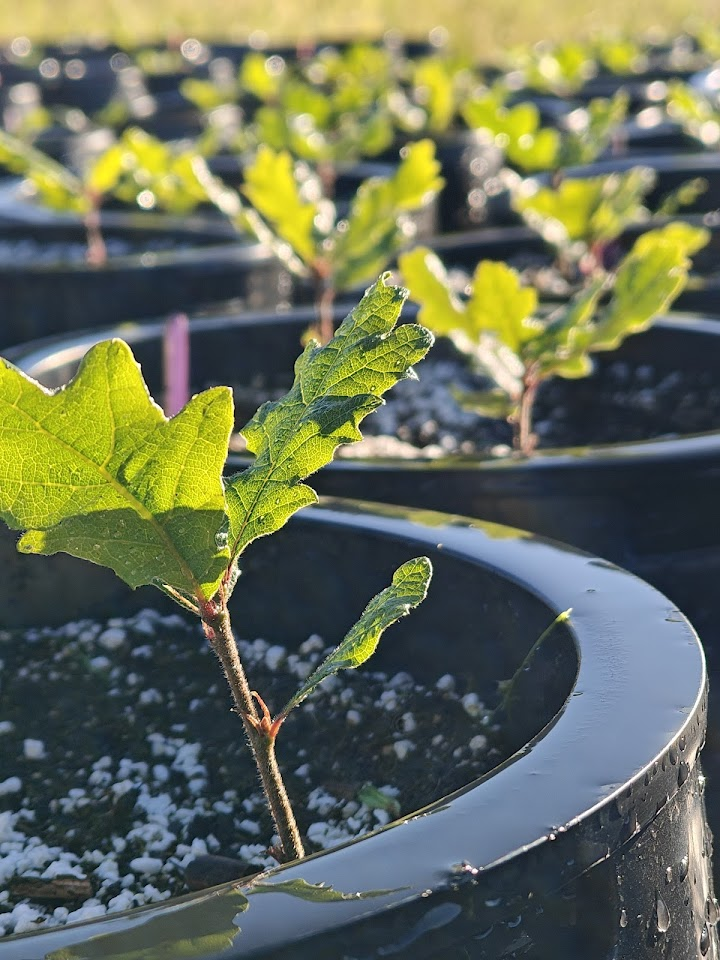
Garry Oaks Near Homes and Underground Utilities
If You Have an Older Home
If your property has an older foundation, aging perimeter drains, or underground services that have not been updated, it is worth understanding the condition of those systems before assuming a nearby Garry oak is the problem. The distance between the tree and your infrastructure also matters. Trees within approximately 2 metres (6.5 feet) of aging infrastructure generally warrant closer evaluation than those located farther away.We are often asked whether Garry oak trees growing near homes or underground utilities are likely to damage buildings, foundations, or pipes. In most cases, the risk is low—particularly for homes built after 1970 using modern construction standards.
Where root-related damage does occur, it is usually associated with aging or poorly constructed infrastructure rather than healthy tree roots. Older clay or concrete pipes, deteriorated joints, shallow foundations, inadequate perimeter drainage, and cracked infrastructure are all more susceptible to root intrusion. Tree roots do not penetrate sound concrete, metal, or plastic. Instead, they exploit existing cracks, loose joints, or locations where moisture and nutrients are escaping into the surrounding soil.A Collaborative Approach
We recommend working with qualified professionals to assess your home’s foundation, perimeter drainage, and underground utilities before making decisions about tree removal. In many cases, infrastructure can be repaired while the tree is successfully retained.Any excavation within a tree’s Critical Root Zone (CRZ)—also referred to as the Protected Root Zone (PRZ)—may require authorization under your local tree protection bylaw. For the best outcomes, foundation and drainage contractors should work collaboratively with a qualified arborist to ensure both municipal requirements and tree protection standards are met.
Modern repair techniques often allow aging infrastructure to be upgraded, future root conflicts to be prevented, and mature Garry oaks to remain healthy. This collaborative approach is not only the most effective solution in many situations but is also required under several municipal tree protection bylaws throughout the Capital Regional District.
Frequently Asked QuestionsShould I water my Garry oak trees during the summer?
Question
I have several Garry oak trees on my property and I’m wondering if I should be watering them regularly during the summer months. If so, what is the best way to water them, and how much water is needed to make a difference?
Answer
Mature Garry oaks are well adapted to our region’s dry summers, but prolonged drought and changing climate conditions can place them under additional stress—particularly in urban settings where soils may be compacted or disturbed.
The general recommendation is to water deeply and infrequently, rather than providing frequent light watering. Deep watering encourages roots to grow deeper into the soil where moisture remains available for longer.
The ideal watering schedule depends on several factors, including:
- Soil type and drainage
- The current health of the tree
- Whether the surrounding area has been disturbed by construction, excavation, or changes in grading
For a healthy tree growing in average soil conditions, a deep soaking every two to three weeks during extended dry periods is generally sufficient. Water slowly until the soil within the tree’s dripline (the area beneath the outer edge of the canopy) is thoroughly moistened and slight surface puddling begins.
For best results:
- Water early in the morning or in the evening to reduce evaporation.
- Concentrate water beneath the canopy rather than directly against the trunk.
- Allow the soil to absorb the water slowly rather than applying it quickly.
During periods of extreme heat or prolonged drought, or if your tree is showing signs of drought stress (such as premature browning or leaf drop), more frequent watering may be beneficial. In severe conditions, watering once or twice per week may help reduce stress.
I found strange larvae and discoloured leaves on my Garry oak. Should I be concerned?
Question
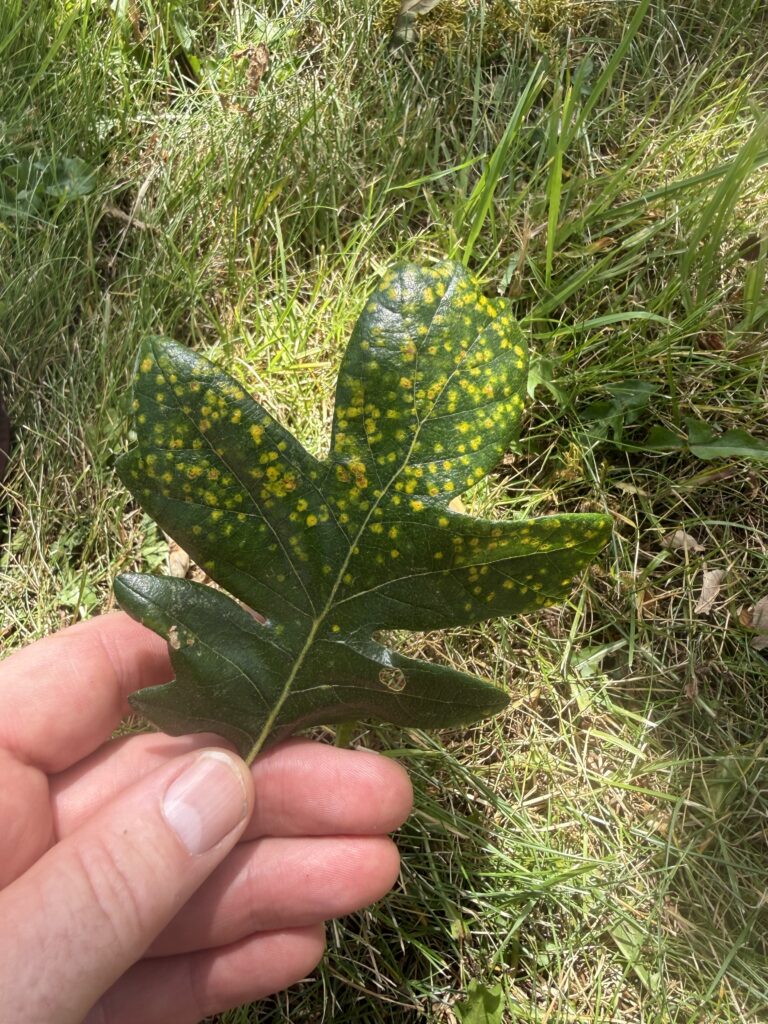
I have a large Garry oak on my property, and I’ve noticed discoloured leaves with unusual larvae on the undersides. Do I need to do anything to protect the tree?
Answer
The symptoms you describe are consistent with the jumping gall wasp (Neuroterus saltatorius), an introduced insect that forms tiny galls on Garry oak leaves.
While heavy infestations can cause leaves to appear scorched or discoloured and may occasionally weaken small twigs or branches, healthy mature Garry oaks generally tolerate these outbreaks well.
Current management recommendations are to allow nature to take its course. Native predators and naturally occurring biological control agents help regulate jumping gall wasp populations over time, and pesticide treatments are generally not recommended.
You may notice:
- Small round galls on the undersides of leaves
- Leaf yellowing, browning, or scorching
- Occasional shedding of small twigs or branches following severe infestations
Continue to monitor your tree and help reduce drought stress by watering appropriately during extended dry periods if needed. If you observe widespread branch dieback, significant canopy decline, or other signs of poor health, consider consulting a qualified arborist experienced with Garry oaks.
For more detailed information about the jumping gall wasp and current management recommendations, see:
Natural Resources Canada — Jumping Gall Wasp Publication
https://publications.gc.ca/collections/collection_2012/rncan-nrcan/Fo29-6-80-1997-eng.pdf -
GOMPS Supports World Migratory Bird Day
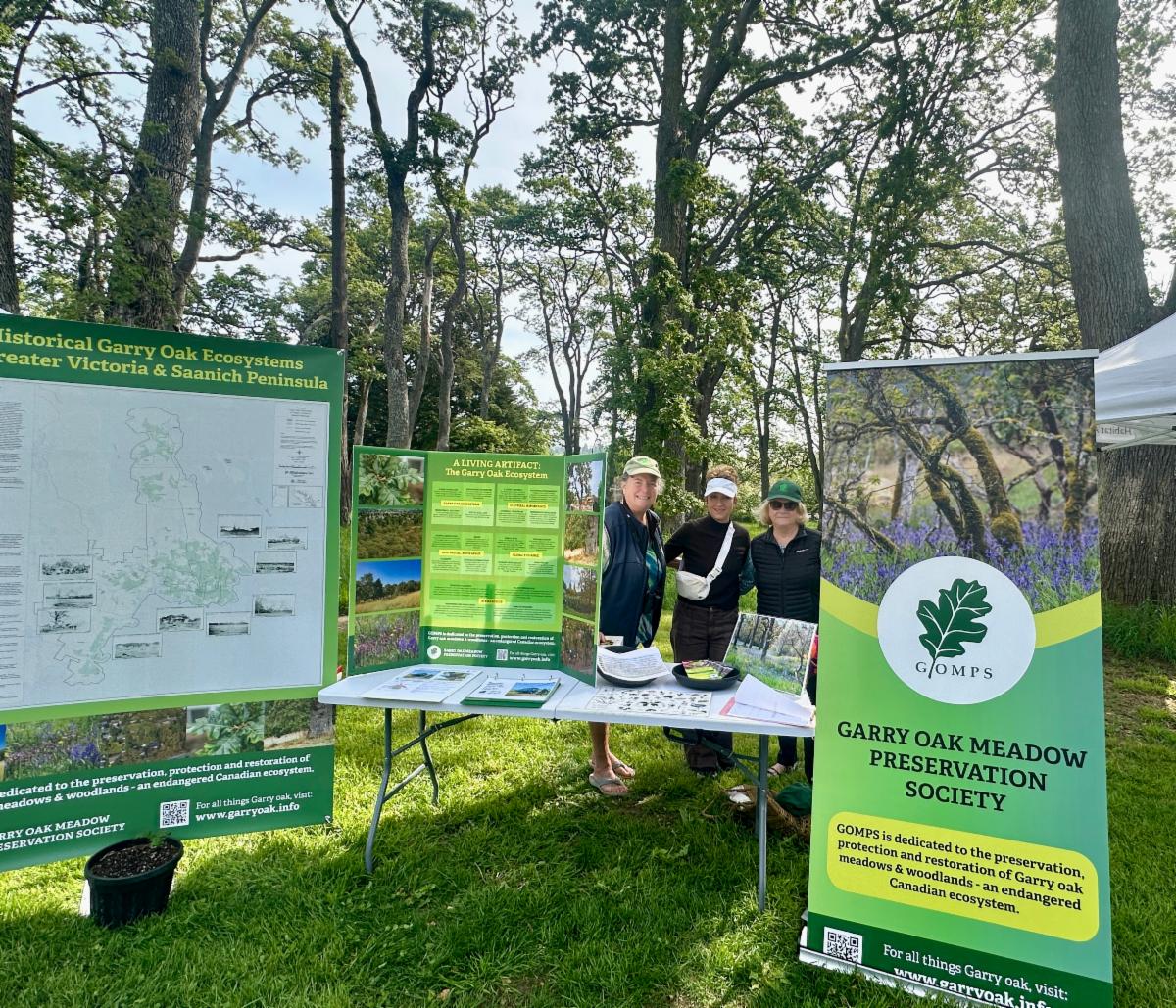
GOMPS was pleased to participate in this year’s World Migratory Bird Day celebrations at MEE-qan (Beacon Hill Park), hosted as part of Victoria Bird Week by the Rocky Point Bird Observatory. The event on May 9, 2026 highlighted the importance of preserving the habitats and well-being of migratory birds and was an opportunity to take part in this global movement to create a brighter future for migratory birds and to share the natural world.
Our booth provided an opportunity to connect with the public about the important relationship between Garry oak ecosystems and bird habitat, while sharing information about GOMPS’ restoration, education, and stewardship initiatives.
Adding a little fun to the day, Carollyne joined Jacques Sirois from the Victoria Harbour Migratory Bird Sanctuary in the crowd-favourite Scream Like a Gull contest. While the competition generated plenty of laughter from participants and spectators alike, it also helped draw attention to the importance of protecting migratory birds and the habitats they depend on.
CHEK NEWS: Scream like a gull content celebrates World Migratory Bird Day. -
Garry Oak Species Detection Project Update
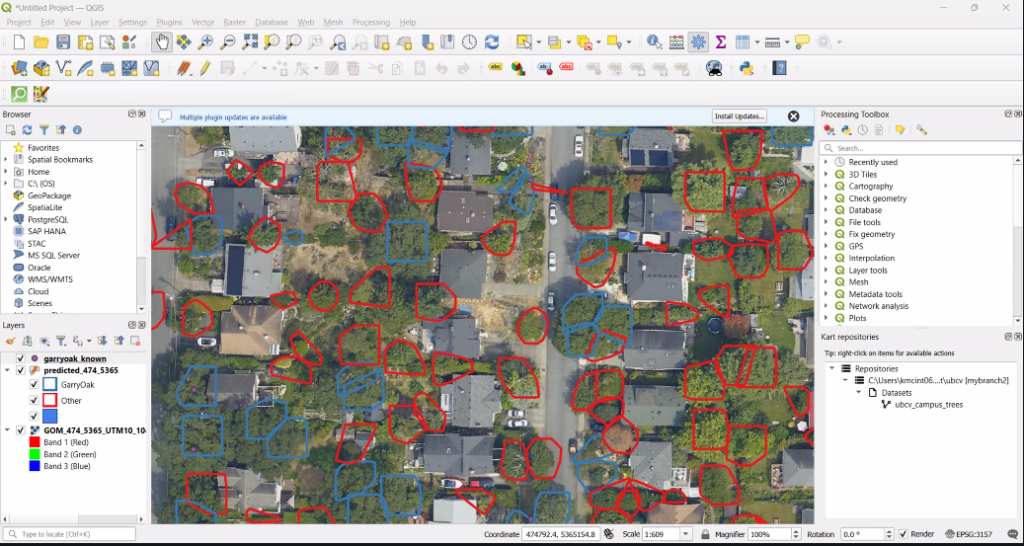
The Garry Oak Species Classification project in partnership with Terra Remote Sensing, UBC MGEM, Raincoast Conservation Foundation, and UBC CUES is nearly complete.
Final processing of GOMPS acquired remote sensing from June 2025 is taking place currently and we are anticipating the project analysis will be complete by August 1st after accuracy assessments have been produced.
The GOMPS Garry oak species classification project will be completed and presented at the Garry Oak Ecosystem Recovery Team (GOERT) Ecosystem Gathering on November 21st featuring Kate McIntyre, Jiaju (Jason) Wu and Ryan Senechal. We are very excited to share the results!
If you would like to support the remote sensing work we are undertaking, please consider a donation through membership or Canada Helps so we may expand our survey area to understand Garry oak presence across the entire region. -
Songhees Nation and the Quadra-McKenzie Plan
🐿️ One of the most significant local discussions this spring centred on the Quadra-McKenzie Plan in Saanich. The Songhees Nation highlighted the importance of viewing growth through the lens of ecosystem health and cultural landscapes, emphasizing that Garry oak ecosystems are part of a living cultural landscape rather than simply vacant land awaiting development. The discussion has helped broaden public understanding of the relationship between Indigenous stewardship and biodiversity.
The Quadra McKenzie Plan (QMP) in Saanich is scheduled for a public hearing on Tuesday, June 16, 2026. The plan proposes significant growth over the next 20 years, concentrating housing and mixed-use development along the Quadra-McKenzie corridor and key transit routes. Its ambitious growth targets are largely driven by provincial housing mandates, illustrating how provincial requirements (Bill 44) are shaping the process more than local area planning.A significant issue attached to the public hearing agenda is a letter from the Songhees Nation, which formally requests that Saanich postpone adoption of the plan until meaningful consultation can occur regarding Garry oak ecosystems, qʷɫaʔəl (camas) food systems, cumulative development impacts, and long-term stewardship planning.
The May 22 letter states:
“The Quadra McKenzie Plan fails to adequately recognize lək̓ʷəŋən Aboriginal Rights and does not provide meaningful protection for the qʷɫaʔəl food system from ongoing development pressures. The proposed land use framework continues patterns of fragmentation and loss affecting a critically endangered ecosystem that is integral to Songhees Nation’s constitutionally protected rights and cultural practices.”
The Songhees Nation specifically asks Council to:
1. Postpone adoption of the Quadra McKenzie Plan pending meaningful consultation with
Songhees Nation regarding Garry Oak ecosystem analysis, cumulative impacts, and longterm
stewardship planning;
2. Include clear Garry Oak and qʷɫaʔəl food system stewardship goals within the QMP,
supported by measurable targets and accountability mechanisms recognizing these
ecosystems as integral to Songhees Nation’s Indigenous rights and cultural continuity; and
3. Develop and implement a responsive management framework outlining mitigation,
restoration, and stewardship measures where ecosystem thresholds or stewardship goals
are not met due to development pressures.The Songhees position goes beyond individual tree protection. It argues that Garry oak ecosystems and camas food systems should be recognized as interconnected cultural landscapes and living food systems rather than collections of isolated trees, and that this extends to the entire ecosystem that supports plants, pollinators, birds, animals, insects, and the cultural practices connected to them.
Their letter describes these systems as being tied to Aboriginal rights, stewardship responsibilities, food sovereignty, medicines, teachings, and the intergenerational transmission of knowledge. They are “not simply ecological features” but living cultural artifacts.
Saanich staff responded that the QMP is a high-level planning document and that issues such as cumulative effects assessment, ecosystem thresholds, restoration priorities, and long-term stewardship are better addressed through future implementation plans and related municipal initiatives.
The staff memo repeatedly suggests that these concerns can be addressed later through:
- Biodiversity Conservation Strategy implementation
- Urban Forest Strategy implementation
- Agriculture and Food Security Plan updates
- Future monitoring and reporting
- Future stewardship initiatives
rather than through amendments to the QMP itself.
Saanich staff are aware that Bill 44 significantly limits municipal authority to protect trees and environmental features that fall within a permitted building envelope on private property.
The problem is that up to 75% of the urban forest exists on private property, where redevelopment is occurring. As redevelopment intensifies, existing soil volumes, mature trees, and ecological functions are removed, while reduced setbacks leave increasingly limited opportunities for meaningful replacement planting. You’ve seen the results already – nothing but a larger building, more concrete features, and some smaller, non-native trees and grasses that can’t support nesting birds, or much else.
Saanich staff responded by discussing future reviews of development tools, integration of ecological objectives into parks and public spaces, monitoring programs, tree retention and planting on public lands, and outreach and educational support for stewardship on private lands.Yet this raises an obvious question: who actually requires the outreach and education?
Most residents (minus the urbanists) already understand that mature trees, healthy soils, and connected ecosystems provide benefits for biodiversity, climate resilience, cooling, stormwater management, and quality of life. The larger challenge is that municipalities are being required to implement provincial housing legislation that unlocks private land for redevelopment while simultaneously reducing their ability to protect environmental features within development sites.
Bill 44 effectively prioritizes housing development within permitted building envelopes, limiting municipal authority to retain trees, soils, and ecological functions on many private properties. Since up to 75% of the urban forest exists on private land, it is these redevelopment decisions—not public park management—that will largely determine the future of urban biodiversity and canopy cover.The Songhees Nation is asking Saanich to pause and first determine ecosystem thresholds, cumulative impacts, stewardship goals, and consultation frameworks before approving a growth plan that will guide development for decades.
Saanich’s response is that the growth framework should proceed now, while those details are addressed through other policies and implementation processes later.
The unanswered question is what happens after dozens—or hundreds—of redevelopment projects.
What is the cumulative ecological loss? What ecosystem thresholds exist? At what point is ecological connectivity broken? At what point does restoration become impossible?
Songhees Nation Letter to Saanich Council Regarding QMP and Saanich Staff Response to Songhees Nation Letter on Quadra McKenzie Plan -
GOMPS Garry Oak Seedlings Thrive at Little Spirits Garden
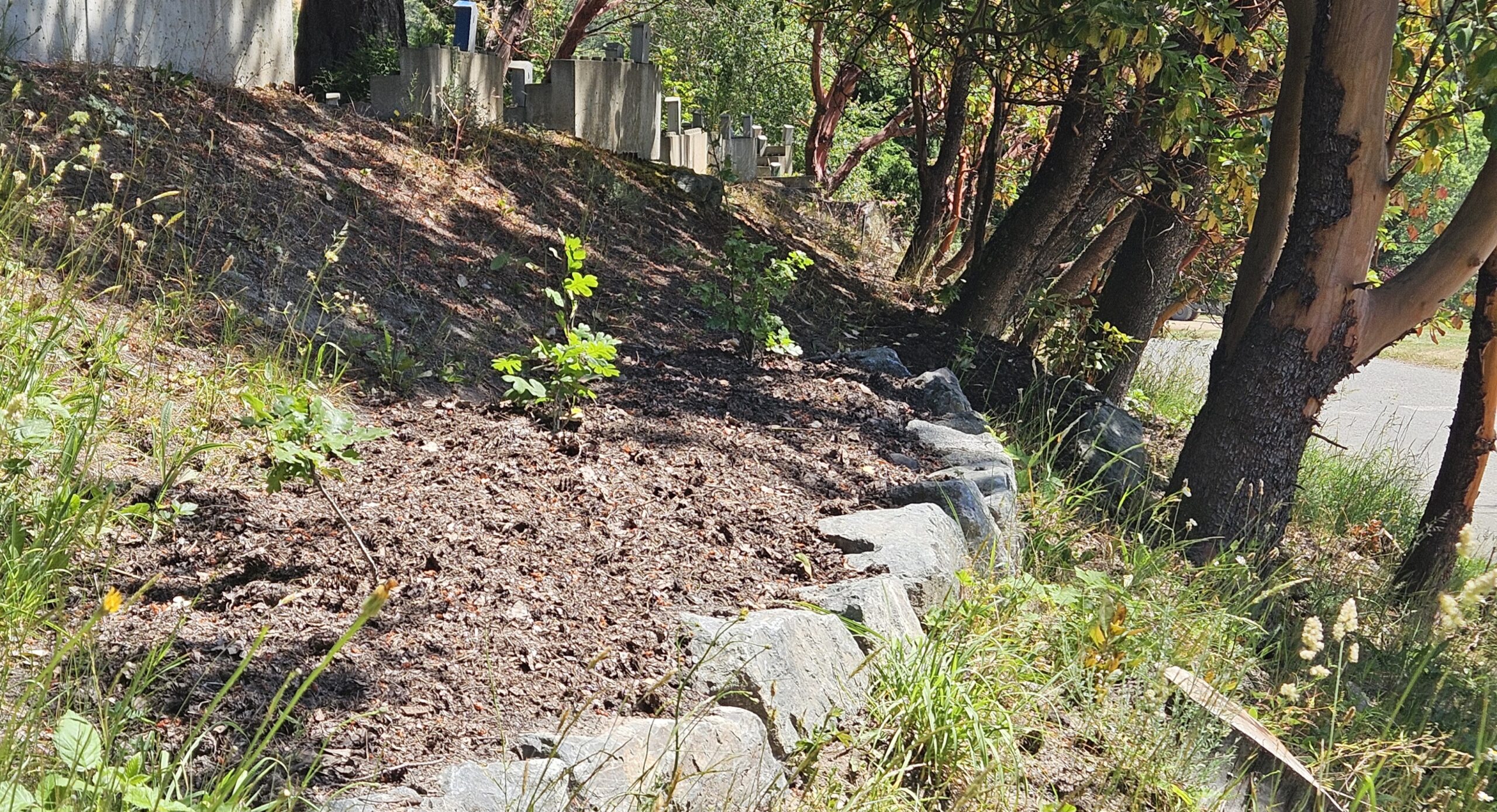
Photo by Judith Carder. GOMPS Garry oak seedlings at the Little Spirits Garden in Royal Oak Burial Park. May 2026.
We are delighted to share an update on several Garry oak seedlings that recently found a new home at the Little Spirits Garden in Royal Oak Burial Park.
Earlier this year, retired minister David Spence visited the Garry Oak Meadow Preservation Society nursery, made a donation in support of our work, and selected a number of locally grown Garry oak seedlings for planting at the Burial Park.On April 22, Earth Day, after the seedlings had been planted by Royal Oak Burial Park staff, David conducted a Tree Blessing ceremony to mark the occasion and celebrate the beginning of the trees’ long lives in this special place.
The photographs below show the young oaks leafing out in their new home. Seeing fresh growth on these seedlings is always rewarding, particularly when they have been planted in a setting dedicated to remembrance, reflection, and connection with the natural world.
As Garry oak ecosystems continue to decline across their range, every new planting contributes to the future of this remarkable species and the hundreds of plants, insects, birds, and other organisms that depend upon it.
We extend our thanks to David Spence and the staff at Royal Oak Burial Park for helping to create a lasting legacy through the planting and stewardship of these young Garry oaks.
We look forward to watching them grow for generations to come.
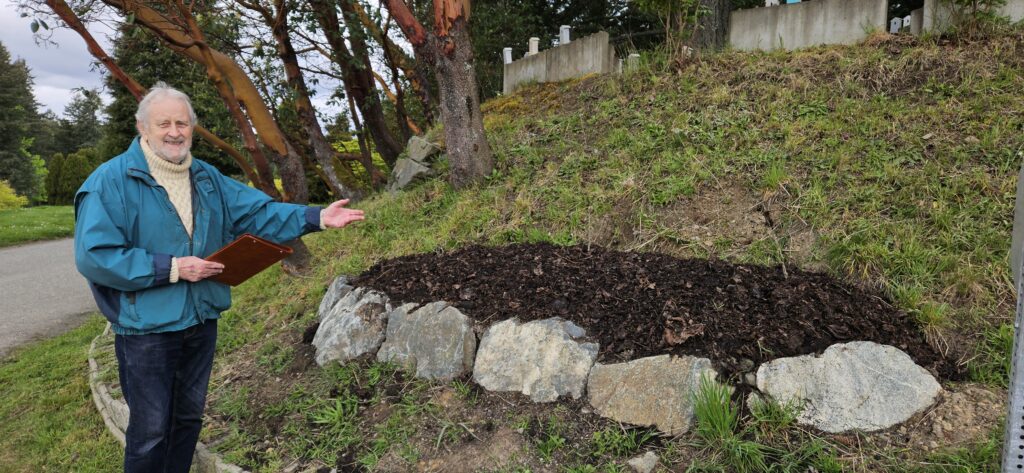
Photo by Judith Carder. Retired minister, David Spence gave a Tree Blessing on April 22, 2026, for GOMPS Garry oak seedlings at the Little Spirits Garden in Royal Oak Burial Park. Tree Blessing
ROB P / ROYAL OAK BURIAL PARK
TREE BLESSING on Earth Day 22 April 2026
LITTLE SPIRIT GARDENS
Under the waning Moon above
(moving from New to Full, as opposed to waxing)
and upon the soil of the Sacred Earth beneath;
where all people hold scared memories, stories, and future hopes.
We gather to bless the young Garry Oak tree saplings
that have been planted in this Little Spirits Garden,
and now are emeging into leaf and fresh vegetation.
We bring our dreams and aspirations
that are grounded in the terra firma —
the terrain — of this Garden of Beauty
This Garden also holds the life of young children
whose Spirits roam in a far and distant realms.
We bring our hearts and souls into this space and this moment
as a sign, a symbol, indeed even a sacrament
to befriend the ancient wisdom of the trees and other living beings
who have brought us to be who we are
and how we are to be one with another.
This is our story. This is our song.
Let the rhythm of the drum be the heart beat of Life and Vitality
Of Resurrection……Reincarnation…..Reviresence……Reciprocity
As we come to meet the Garry Oak
and become acquainted with each of them
in all their manifestations…….the species…….the geniuses
Theses young saplings are today
what is known as those beings who are an integral part of the
UNDERSTORY
who compose a melody wtih mycelium …..
and are bursting forth with energy.
They are not yet the OVERSTORY
of the great canopies of anicent elders…..and memory holders
They are young pioneers
seeking to embody and embolden life
with their particulraity of genes, DNA, Chromosomes
They are playfully engaged with “fungi”
with nutrients, ferns, wildflowers, and other souls;
seeking to find their own voice in this Garden
for they live and move
with a different logic and a different way of knowing.
This is our story. This is our song.
GARRY OAK BLESSING
May the rains fall softly upon your branches and leaves
May the winds blow gently in all your days
May the sunshine radiate warmth on your face
May the soil bring you nourishment to your roots, your trunk, your canopy
May love and kindness, joy and peace,
always abide and abound in your soul
Until we meet again
May the Holy Spirit and the Sacred Quaternity SACRED QUATREAUX
bless you,
and keep you comforted and free among all your siblings
to live in Faith, Fullness of being, and Future ways of wonder and wisdom
This is our story. This is our song
Let your touch remain forever as a kiss upon your cheek
And a prayer in your body.
As we give a BLESSING to trees; the TREES in turn send a blessing back
to those who give in Reciprocity, Conviviality, & Symbiosis.
…….acorns to be distributed…….