
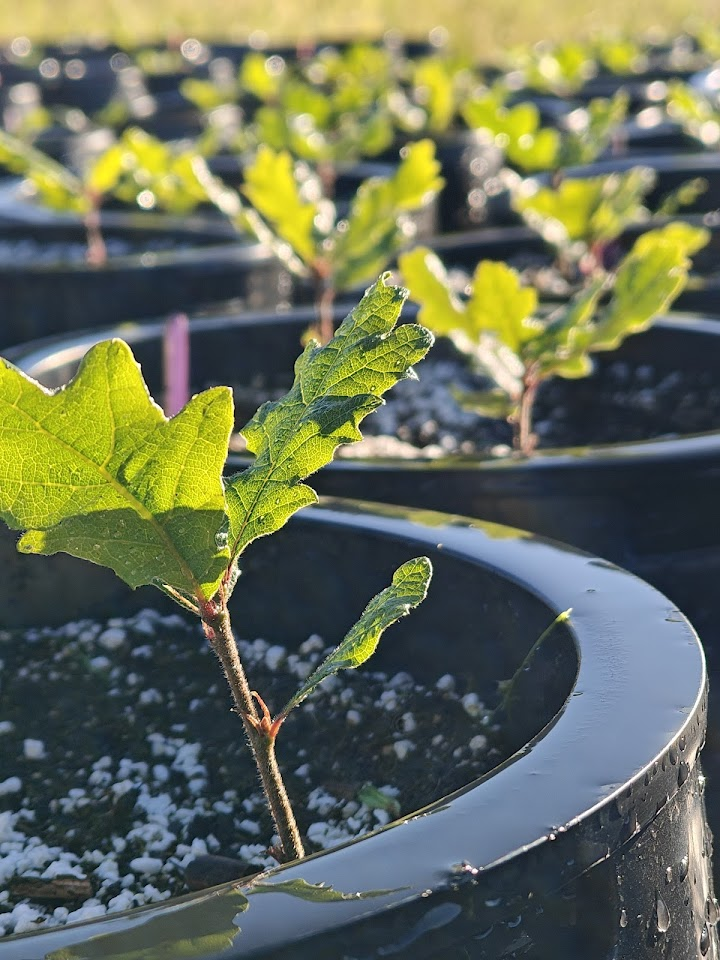
Garry Oaks Near Homes and Underground Utilities
If You Have an Older Home
If your property has an older foundation, aging perimeter drains, or underground services that have not been updated, it is worth understanding the condition of those systems before assuming a nearby Garry oak is the problem. The distance between the tree and your infrastructure also matters. Trees within approximately 2 metres (6.5 feet) of aging infrastructure generally warrant closer evaluation than those located farther away.
We are often asked whether Garry oak trees growing near homes or underground utilities are likely to damage buildings, foundations, or pipes. In most cases, the risk is low—particularly for homes built after 1970 using modern construction standards.
Where root-related damage does occur, it is usually associated with aging or poorly constructed infrastructure rather than healthy tree roots. Older clay or concrete pipes, deteriorated joints, shallow foundations, inadequate perimeter drainage, and cracked infrastructure are all more susceptible to root intrusion. Tree roots do not penetrate sound concrete, metal, or plastic. Instead, they exploit existing cracks, loose joints, or locations where moisture and nutrients are escaping into the surrounding soil.
A Collaborative Approach
We recommend working with qualified professionals to assess your home’s foundation, perimeter drainage, and underground utilities before making decisions about tree removal. In many cases, infrastructure can be repaired while the tree is successfully retained.
Any excavation within a tree’s Critical Root Zone (CRZ)—also referred to as the Protected Root Zone (PRZ)—may require authorization under your local tree protection bylaw. For the best outcomes, foundation and drainage contractors should work collaboratively with a qualified arborist to ensure both municipal requirements and tree protection standards are met.
Modern repair techniques often allow aging infrastructure to be upgraded, future root conflicts to be prevented, and mature Garry oaks to remain healthy. This collaborative approach is not only the most effective solution in many situations but is also required under several municipal tree protection bylaws throughout the Capital Regional District.
Frequently Asked Questions
Should I water my Garry oak trees during the summer?
Question
I have several Garry oak trees on my property and I’m wondering if I should be watering them regularly during the summer months. If so, what is the best way to water them, and how much water is needed to make a difference?
Answer
Mature Garry oaks are well adapted to our region’s dry summers, but prolonged drought and changing climate conditions can place them under additional stress—particularly in urban settings where soils may be compacted or disturbed.
The general recommendation is to water deeply and infrequently, rather than providing frequent light watering. Deep watering encourages roots to grow deeper into the soil where moisture remains available for longer.
The ideal watering schedule depends on several factors, including:
- Soil type and drainage
- The current health of the tree
- Whether the surrounding area has been disturbed by construction, excavation, or changes in grading
For a healthy tree growing in average soil conditions, a deep soaking every two to three weeks during extended dry periods is generally sufficient. Water slowly until the soil within the tree’s dripline (the area beneath the outer edge of the canopy) is thoroughly moistened and slight surface puddling begins.
For best results:
- Water early in the morning or in the evening to reduce evaporation.
- Concentrate water beneath the canopy rather than directly against the trunk.
- Allow the soil to absorb the water slowly rather than applying it quickly.
During periods of extreme heat or prolonged drought, or if your tree is showing signs of drought stress (such as premature browning or leaf drop), more frequent watering may be beneficial. In severe conditions, watering once or twice per week may help reduce stress.
I found strange larvae and discoloured leaves on my Garry oak. Should I be concerned?
Question
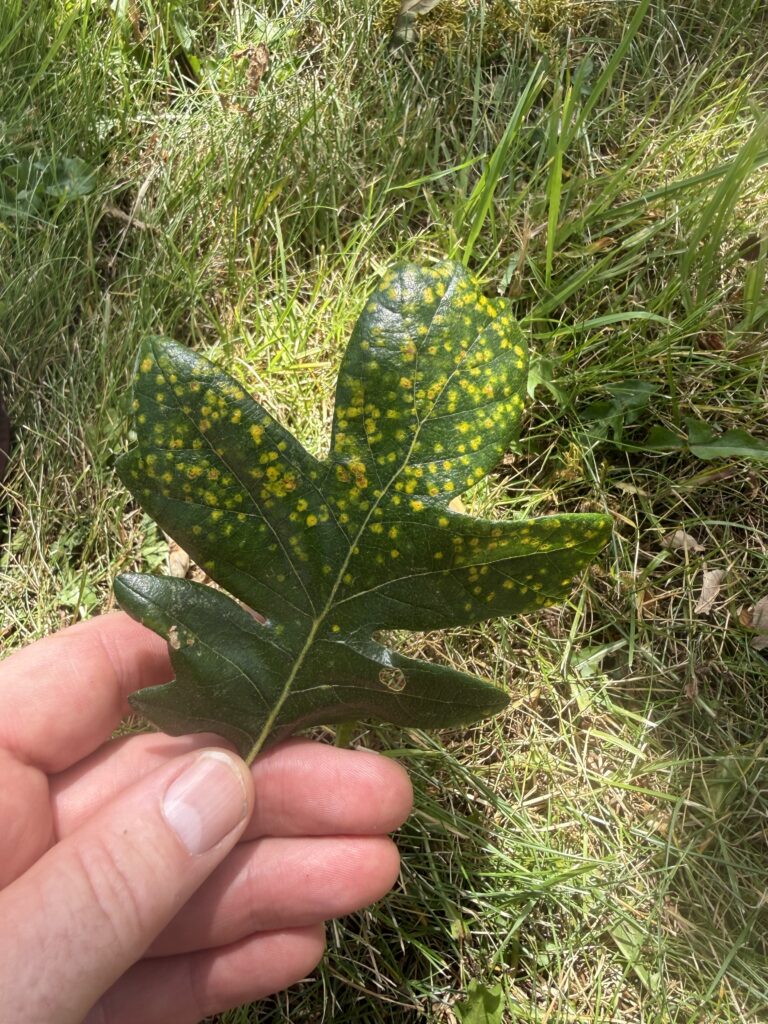
I have a large Garry oak on my property, and I’ve noticed discoloured leaves with unusual larvae on the undersides. Do I need to do anything to protect the tree?
Answer
The symptoms you describe are consistent with the jumping gall wasp (Neuroterus saltatorius), an introduced insect that forms tiny galls on Garry oak leaves.
While heavy infestations can cause leaves to appear scorched or discoloured and may occasionally weaken small twigs or branches, healthy mature Garry oaks generally tolerate these outbreaks well.
Current management recommendations are to allow nature to take its course. Native predators and naturally occurring biological control agents help regulate jumping gall wasp populations over time, and pesticide treatments are generally not recommended.
You may notice:
- Small round galls on the undersides of leaves
- Leaf yellowing, browning, or scorching
- Occasional shedding of small twigs or branches following severe infestations
Continue to monitor your tree and help reduce drought stress by watering appropriately during extended dry periods if needed. If you observe widespread branch dieback, significant canopy decline, or other signs of poor health, consider consulting a qualified arborist experienced with Garry oaks.
For more detailed information about the jumping gall wasp and current management recommendations, see:
Natural Resources Canada — Jumping Gall Wasp Publication
https://publications.gc.ca/collections/collection_2012/rncan-nrcan/Fo29-6-80-1997-eng.pdf