Garry Oak species classification within urban forest canopy analysis: a collaboration between GOMPS, UBC’s Master of Geomatics For Environmental Management, and Terra Remote Sensing
Project Origins
Garry Oak Meadow Preservation Society has set out to develop a new approach to urban forest monitoring using remote sensing technologies. The Greater Victoria Area is situated in some of the highest remaining concentrations of Garry oak trees and Garry oak and associated ecosystems, and the critically endangered Garry oak ecosystem is facing intensifying land use development pressure. Measuring change in historic Garry oak ecosystem presence and the sharp decline of its extent over time was captured in Historical Garry oak ecosystems of Vancouver Island, British Columbia, pre-European contact to the present (Ted Lea, 2006), but at a very large scale that presents challenges to interpret and apply at the local scale to understand Garry oak ecosystem health and extent.
Garry Oak Mapping in the Capital Region
Garry oak-specific mapping has not been updated since the production of Ted Lea’s 2006 publication, but urban forest canopy measuring and monitoring has gradually come online thanks to early efforts spearheaded by Habitat Acquisition Trust to measure land cover classification at the regional scale, and later with multiple local governments adopting urban tree canopy analysis within the Capital Regional District. GOMPS identified a gap in urban forest measuring approach and recognized that providing Garry oak-specific analysis would inform better overall urban forest decision making and outcomes.
Fielding Interest and Research
In 2023, GOMPS began exploring the body of research on remote sensing approaches to classify individual tree species, and consulted with experts in remote sensing in academic, non-profit, government, and commercial organizations to develop a project scope with the greatest potential for accuracy, repeatability, and ultimately adoption by local government urban forest managers. We learned that while species classification was a capacity that was growing in commercial forestry applications, it remained largely absent from urban forest canopy analysis, and Garry oak species classification had not been conducted in academic or commercial applications. Recognizing the importance of a high-accuracy Garry oak-specific lens to support better urban forest stewardship decision making across the region, there was awareness that GOMPS would be the ideal organization to fundraise, activate, and lead the research and development of this tool.
Study Area
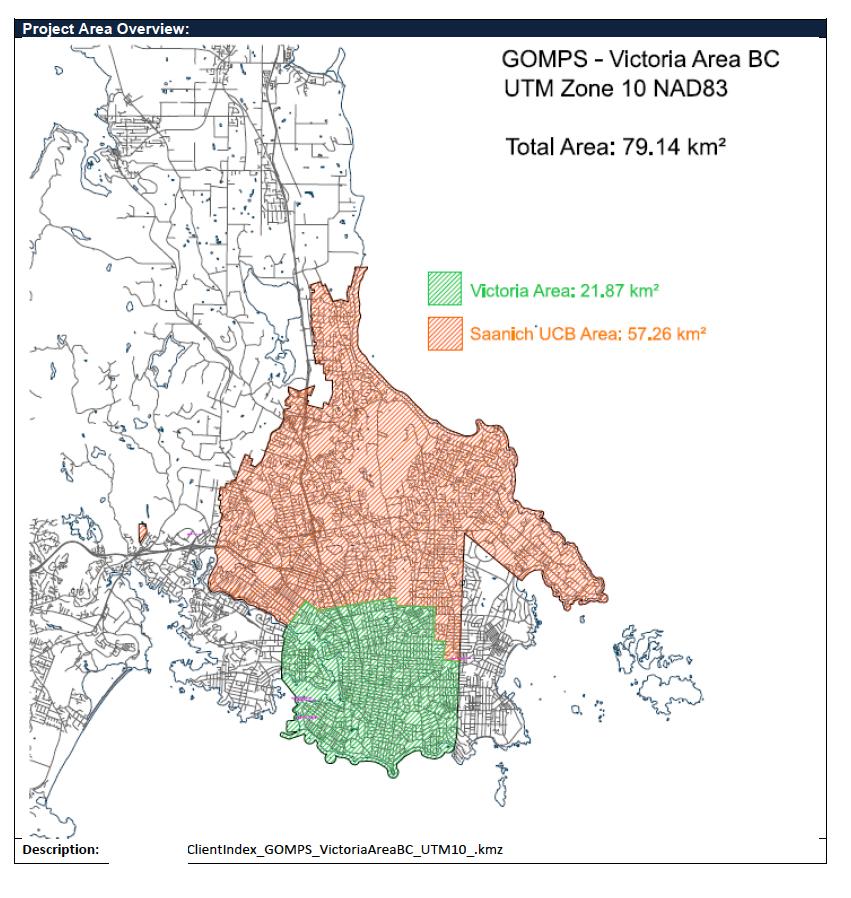
The study area selected was City of Victoria and a portion of District of Saanich defined as the urban containment boundary. The area selected was targeted intentionally for several purposes, including the strength of existing urban forest management policies and availability of existing urban forest analysis products, for example, a public tree inventory (City of Victoria), and multiple years of urban forest canopy analysis using LiDAR (City of Victoria, District of Saanich). Both City of Victoria and District of Saanich had the greatest commitment and available resources to conduct ongoing measuring and monitoring of the urban forest, and are facing enormous urban development pressure with Provincial legislation adopted in 2023 (e.g., the Housing Supply Act, Housing Statutes (Residential Development) Amendment Act, etc.). Both communities have urban forests which are situated disproportionately on private property (e.g., 75% of City of Victoria’s and 72% of District of Saanich’s urban forest are on private lands), indicating high exposure of Garry oak loss to private land use development and low capacity for those communities to offset those losses on public property. GOMPS’ narrowed the survey for this initial proof of concept project based on the high cost of imagery/LiDAR acquisition with hopes that this project can be replicated in the near future to incorporate other municipalities in the Capital Regional District and beyond.
Project Launch
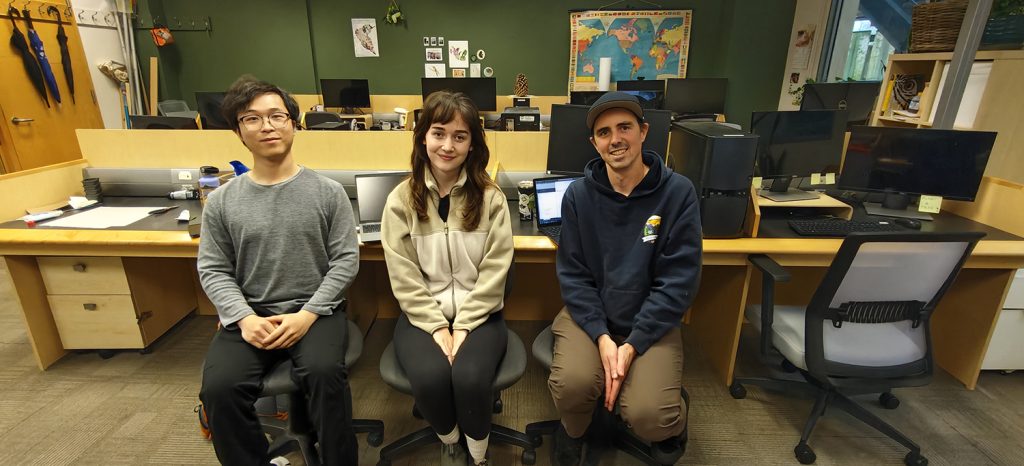
Shortly after the Board’s approval of the project in late 2024 and GOMPS receiving a generous donation to enable the acquisition of aerial imagery/LiDAR, a remote sensing contractor was selected in late 2024 who satisfied the technical capacity required for the project. Shortly before the flight to acquire the raw imagery and LiDAR of the study area, news of our official connection to UBC’s MGEM program came with two students (Kate McIntyre and Jason Wu) being assigned to the research and development of the species classification tool for their capstone projects. The project technical capacity within GOMPS is provided by its Board President, Ryan Senechal, an urban forest professional and educator based in Saanich. Ryan’s work as Lecturer of Urban Forestry at UBC’s Faculty of Forestry connected him globally to urban forest remote sensing research and case study, and to researchers and experts in environmental geomatics within the Faculty.
Data Acquisition
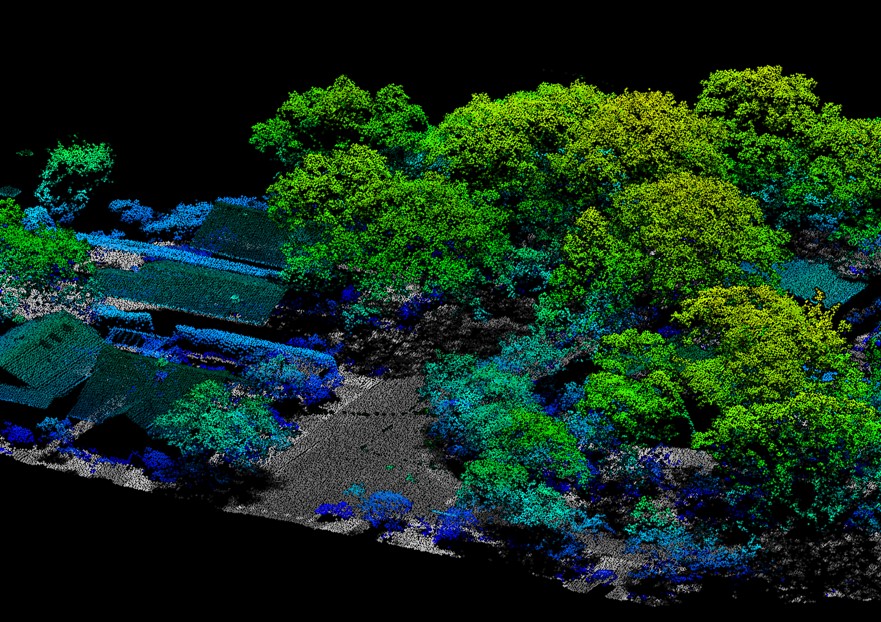
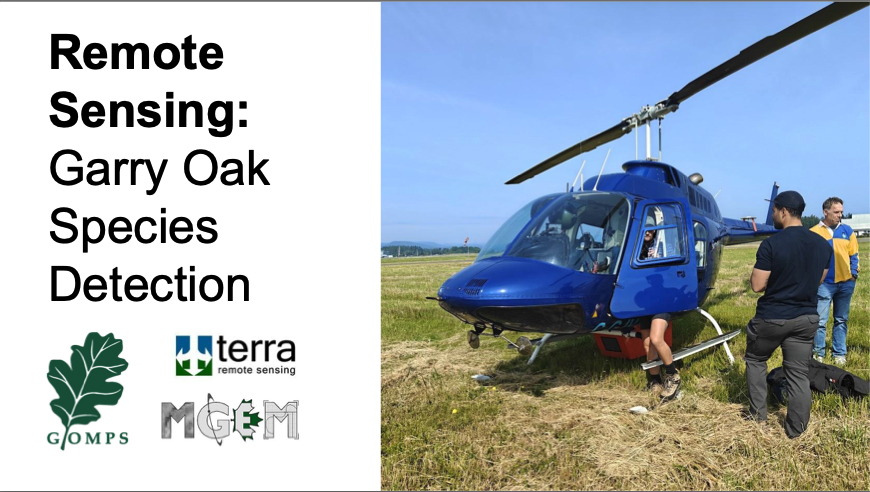
Terra Remote Sensing based in Sidney, BC, contracted two flights at 900 m flight level midday in late June of 2025 near the summer equinox, and this timing was intended to capture Garry oaks in full early summer foliage while minimizing shadows on aerial imagery due to sun angle during flights. Technical specifications of the data acquired include 4 band (RGB, NIR) orthographic imagery at 10 cm resolution, and 2 mhz pulse rate LiDAR at 45 points/m2 point cloud density and a scan angle of 60 degrees (30 degrees per side). The reason we chose to acquire raw data using preferred timing and resolution was to provide ideal data quality to perform software analysis and achieve the highest possible accuracy of the tool that is delivered at completion of the project. Previously flown and acquired datasets are more cost effective but may not be ideally timed or provide the specifications we desired, for example, the near infrared spectrum of aerial imagery, which is likely to play an important role in the accuracy of species classification in the analysis phase.
Data Analysis
The project has entered the analysis stage starting with Terra Remote Sensing’s initial data cleaning, pre-classification tree height at minimum 2 m height, and an urban forest canopy analysis incorporating all species. Kate and Jason from UBC’s MGEM program have been busy in their graduate course work developing knowledge and skills with geospatial, LiDAR and multi-spectral analysis and have been participating in occasional workshops with Terra Remote Sensing’s technical team. The development of species classification will be completed in mid-2026 and GOMPS is excited to circulate these datasets through our website and to partner organizations and governments following accuracy assessments at the completion of this project.
Open Source Information
This project incorporates community open access as a key priority, including the distribution of our project scope and methods, datasets, key findings, and limitations. We are pleased to support Indigenous governments, organizations and governments, researchers and non-profit organizations with our obtained LiDAR and ortho products by request. For access to dataset requests and other project inquiries, please contact us.